
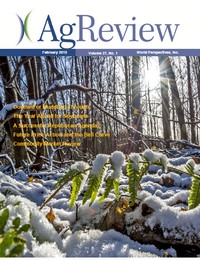
Doomed or Muddling Through Global economic and political developments present many concerns, but there are a few less stark perspectives. The Year Ahead for Soybeans With high global soybean prices over the past six years, the U.S. and South America have sharply increased production to record levels. This has impacted global soybean ending stocks and consequently prices in the year ahead. Will the Republican Congressional Agenda Be Successful? The 2014 election provided a historic turnover in Congress that could bring many changes in the coming year. However, whether changes actually occur remains to be seen. Future Price Action and the Bell Curve The view that prices for agricultural commodities are entering a prolonged period of lo...



 What You Need to Know Today: Harvest pressure in the U.S. sent corn and soybeans lower as supplies increased and there were signs USDA’s upward revisions to yields in the October WASDE could be close to right. The conflict between Russia and Ukraine escalated over the weekend, with Ukrai...
 Developer's Note 24 August 2026: WPI recently completed an exercise that updated the codebase for this app and solved some of the discrepancies between our five-year average calculation and USDA's. There are a few lingering cases where early (late) starts (finishes) to the crop cycle resu...
 Argentina Sunflower Sunflower remains one of the most attractive crops in Argentina, supported by strong demand and favorable prices that currently offer some of the best projected production margins among summer crops. Planted area is estimated at 3.0-3.1 Mha, with around 42 percent already se...

From WPI Consulting
Forecasting developments in production agriculture
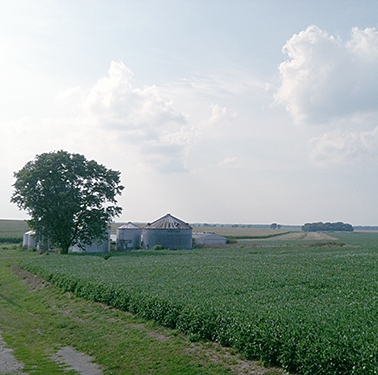
On behalf of a private U.S. agricultural technology provider, WPI’s team generated an econometric model to forecast the movement of concentrated corn production north and west from the traditional U.S. Corn Belt. WPI’s model has subsequently provided quantitative support to a multi-million-dollar investment into short-season corn variety development. WPI’s methodology included a series of interviews with regional grain elevators and seed consultants. Emphasizing outreach and communication with stakeholders who possess intimate sectoral knowledge – on-the-ground insights – is a regular component of WPI’s methodologies, made possible by WPI’s ever-growing network of industry contacts.