


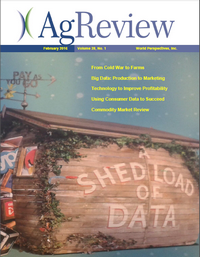
From Cold War to Farms Big data got a slow start in agriculture and many fear some of the outcomes it offers, but opportunity is certainly one of them. Linking Big Data to Production Data analytics changed the way baseball is played; how can the agriculture and food sectors follow that path? Technology to Improve Profitability Surviving difficult times requires the use of new technologies and information to help with decision-making and improve marketing. That It Should Come to This: Using Consumer Data to Succeed How can relevant, valid data be mined for use in increasing agricultural exports? Commodity Market Review Unsettled markets tend to be volatile, and that was certainly true in January...


 What You Need to Know Today: Harvest pressure in the U.S. sent corn and soybeans lower as supplies increased and there were signs USDA’s upward revisions to yields in the October WASDE could be close to right. The conflict between Russia and Ukraine escalated over the weekend, with Ukrai...

 Key Takeaways: India is excluding sugarcane juice, sugar syrup, and B-heavy molasses from its 2026/27 fuel ethanol procurement program to protect domestic sugar supplies, potentially shifting additional demand toward corn and rice. India’s corn consumption for ethanol has surged from jus...
 Developer's Note 24 August 2026: WPI recently completed an exercise that updated the codebase for this app and solved some of the discrepancies between our five-year average calculation and USDA's. There are a few lingering cases where early (late) starts (finishes) to the crop cycle resu...

From WPI Consulting
Communicating importance of value-added products

Facing increasing pressure to quantify the value of export promotion efforts to investors, a U.S. industry organization retained WPI to develop a quantitative model that better communicated the importance of exports. The resulting model concluded that value-added meat exports contributed $0.45 cents per bushel to the price of corn, increasing support for that sector’s financial support of WPI’s client. In addition to serving the red meat industry with this type of analysis, WPI has generated similar deliverables for the U.S. soybean and poultry/egg industries.