


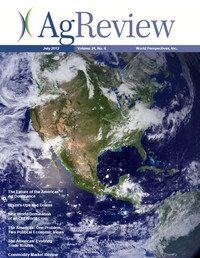
The Future of the Americas’ Ag Dominance Africa and the former Soviet Union have agricultural potential, but factors favor the Americas as continuing agricultural suppliers. Brazil’s Ups and Downs Brazil’s dominance in agricultural products is a major reason why its economic growth has been climbing steadily higher for the past decade. Going into 2012/13, what’s next for this world super power? New World Domination of an Old World Crop Asia may be the ancestral home of soybeans, but it is the Americas where their production is now centered. Today about 87 percent of the world’s soybeans are produced in the New World: North America, Central America and South America. The Americas: One Problem, Two Politic...


 What You Need to Know Today: Harvest pressure in the U.S. sent corn and soybeans lower as supplies increased and there were signs USDA’s upward revisions to yields in the October WASDE could be close to right. The conflict between Russia and Ukraine escalated over the weekend, with Ukrai...

 Key Takeaways: India is excluding sugarcane juice, sugar syrup, and B-heavy molasses from its 2026/27 fuel ethanol procurement program to protect domestic sugar supplies, potentially shifting additional demand toward corn and rice. India’s corn consumption for ethanol has surged from jus...
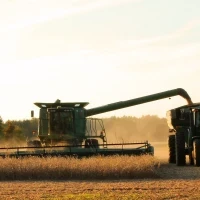 Developer's Note 24 August 2026: WPI recently completed an exercise that updated the codebase for this app and solved some of the discrepancies between our five-year average calculation and USDA's. There are a few lingering cases where early (late) starts (finishes) to the crop cycle resu...

From WPI Consulting
Infrastructure investment due diligence
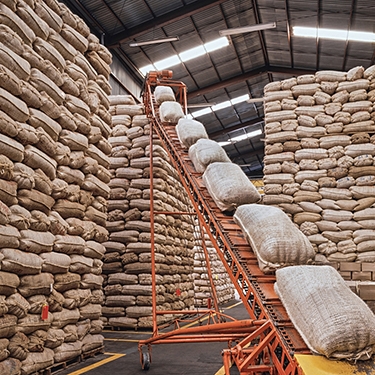
On behalf of a Canadian oilseed processer WPI's team provided market analysis, econometric modeling and financial due diligence in support of a $24 million-dollar investment in a Ukrainian crush plant. Consistent with WPI's findings, local production to supply the plant and the facility's output have expanded exponentially since the investment. WPI has conducted parallel work on behalf of U.S., South American and European clients, both private and public, in the agri-food space.