
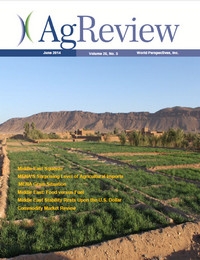
Middle East Squeeze The energy abundance brought about by the fracking boom is causing OPEC heartache and could eventually spark another Middle East food crisis. MENA'S Surprising Level of Agricultural Imports Despite the enormous turmoil experienced by countries in the MENA, these nations have largely managed to continue importing close to the same volume of key commodities. MENA Grain Situation The MENA region will continue to be a major importer of all grains as it is not possible that production there will expand enough to meet the demand of its rapidly growing population. Middle East: Food versus Fuel According to the World Bank, 50 percent of the food consumed in the Middle East and North Africa is imported. Much of the region...



 What You Need to Know Today: Harvest pressure in the U.S. sent corn and soybeans lower as supplies increased and there were signs USDA’s upward revisions to yields in the October WASDE could be close to right. The conflict between Russia and Ukraine escalated over the weekend, with Ukrai...
 Developer's Note 24 August 2026: WPI recently completed an exercise that updated the codebase for this app and solved some of the discrepancies between our five-year average calculation and USDA's. There are a few lingering cases where early (late) starts (finishes) to the crop cycle resu...
 Argentina Sunflower Sunflower remains one of the most attractive crops in Argentina, supported by strong demand and favorable prices that currently offer some of the best projected production margins among summer crops. Planted area is estimated at 3.0-3.1 Mha, with around 42 percent already se...

From WPI Consulting
Accountability and a comprehensive approach to export programming

WPI’s team helped construct a strategic approach to develop, implement, and track promotional activities in 8 key regions across the globe for an agricultural export association. With continued progress measurement and strategic advisory services from WPI, the association has seen its ROI from investments in promotional programming increase by 44 percent over the past 5 years. Not only does this type of holistic approach to organizational strategy provide measurable results to track and analyze, it fosters top-down and bottom-up organizational accountability.