


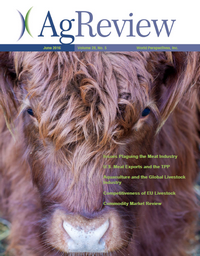
Issues Plaguing the Meat Industry From animal welfare to meat substitutes, the livestock sector faces many challenges. U.S. Meat Exports and the TPP The U.S. International Trade Commission’s (ITC’s) analysis of the Trans-Pacific Partnership (TPP) projects the biggest increase in U.S. beef, pork and poultry exports will be to Japan. Aquaculture and the Global Livestock Industry While the swine, poultry, beef and dairy sectors are the most important in the global livestock arena, aquaculture is a large and fast-growing part of that industry today. Competitiveness of EU Livestock The combination of extensive regulation weighing on margins and generally low price levels has already put the EU livestock sector in a crisis mode...


 What You Need to Know Today: Harvest pressure in the U.S. sent corn and soybeans lower as supplies increased and there were signs USDA’s upward revisions to yields in the October WASDE could be close to right. The conflict between Russia and Ukraine escalated over the weekend, with Ukrai...

 Key Takeaways: India is excluding sugarcane juice, sugar syrup, and B-heavy molasses from its 2026/27 fuel ethanol procurement program to protect domestic sugar supplies, potentially shifting additional demand toward corn and rice. India’s corn consumption for ethanol has surged from jus...
 Developer's Note 24 August 2026: WPI recently completed an exercise that updated the codebase for this app and solved some of the discrepancies between our five-year average calculation and USDA's. There are a few lingering cases where early (late) starts (finishes) to the crop cycle resu...

From WPI Consulting
Communicating importance of value-added products

Facing increasing pressure to quantify the value of export promotion efforts to investors, a U.S. industry organization retained WPI to develop a quantitative model that better communicated the importance of exports. The resulting model concluded that value-added meat exports contributed $0.45 cents per bushel to the price of corn, increasing support for that sector’s financial support of WPI’s client. In addition to serving the red meat industry with this type of analysis, WPI has generated similar deliverables for the U.S. soybean and poultry/egg industries.