

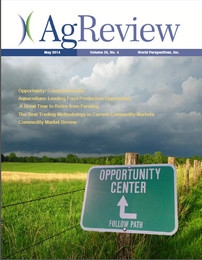
Opportunity: Complementarity The TTIP negotiations are an opportunity, despite the skepticism. The challenge is overcoming all of the pitfalls and finding complementarity. Aquaculture: Leading Food Production Opportunity Aquaculture production has grown at an annual rate of 8.3 percent and must continue to expand in order to meet the rising global demand for seafood. A Great Time to Retire from Farming Perhaps the most overlooked opportunity in agriculture today is the opportunity to sell farmland. The Best Trading Methodology in Current Commodity Markets Current higher volatility in commodity markets requires higher probability trades in order to avoid the "Risk of Ruin." Commodity Market Review April is usually considered the mon...



 What You Need to Know Today: Harvest pressure in the U.S. sent corn and soybeans lower as supplies increased and there were signs USDA’s upward revisions to yields in the October WASDE could be close to right. The conflict between Russia and Ukraine escalated over the weekend, with Ukrai...
 Developer's Note 24 August 2026: WPI recently completed an exercise that updated the codebase for this app and solved some of the discrepancies between our five-year average calculation and USDA's. There are a few lingering cases where early (late) starts (finishes) to the crop cycle resu...

 Last week, September inflation reports showed that the Producer Price Index rose 1.3 percent, far ahead of the 0.6 percent consensus expectation, while the Consumer Price Index (CPI) rose 0.6 percent, in line with expectations. However, September also marked the 66th consecutive month that both...

From WPI Consulting
Illuminating the value of technical research
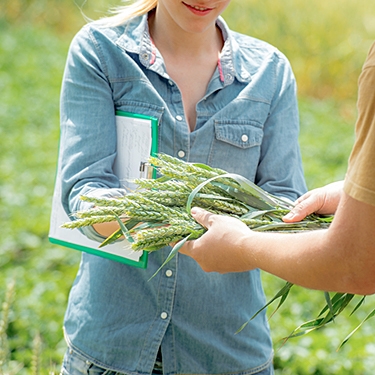
On behalf of a commodity producer organization, WPI evaluated the outputs from a project that featured a $5 million investment into technical research over multiple years. WPI’s team captured the results of this extensive effort and synthesized them for presentation to the organization’s governing board; among the findings uncovered and presented for the first time was the development of genomic traits proven, via rigorous testing, to provide crop yield advantages of 50 percent or more to U.S. farmers in times of drought. Capturing measurable results from long-term efforts can be challenging. Educating clients on the dynamics of success measurement when quantifiable results are not readily available requires deep client-consultant collaboration and an ability to consider both near- and long-term client aspirations with market/policy dynamics – attributes that WPI brings to every consulting engagement.