


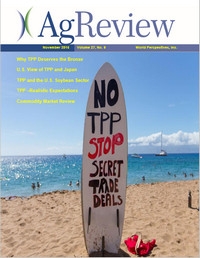
Reasons to give TPP the Bronze Bronze is very durable, but it is an alloy rather than a pure metal like gold or silver. The TPP is a bronze standard agreement.. From U.S. Perspective, TPP is About Japan The Trans-Pacific Partnership (TPP) has been oversold politically in the U.S. as a gateway to Asia, strategically the most important region of the world for trade. From the perspective of the U.S., however, the TPP is really about only Japan. TPP Positive for U.S. Soy Sector The U.S. soybean industry stands to gain significantly from TPP, particularly in Japan where tariffs on soyoil will be phased out in the future. TPP - The Importance of Realistic Expectations Future analysis may prove all of the anticipatory fanfare regarding the...


 What You Need to Know Today: Harvest pressure in the U.S. sent corn and soybeans lower as supplies increased and there were signs USDA’s upward revisions to yields in the October WASDE could be close to right. The conflict between Russia and Ukraine escalated over the weekend, with Ukrai...

 Key Takeaways: India is excluding sugarcane juice, sugar syrup, and B-heavy molasses from its 2026/27 fuel ethanol procurement program to protect domestic sugar supplies, potentially shifting additional demand toward corn and rice. India’s corn consumption for ethanol has surged from jus...
 Developer's Note 24 August 2026: WPI recently completed an exercise that updated the codebase for this app and solved some of the discrepancies between our five-year average calculation and USDA's. There are a few lingering cases where early (late) starts (finishes) to the crop cycle resu...

From WPI Consulting
Accountability and a comprehensive approach to export programming

WPI’s team helped construct a strategic approach to develop, implement, and track promotional activities in 8 key regions across the globe for an agricultural export association. With continued progress measurement and strategic advisory services from WPI, the association has seen its ROI from investments in promotional programming increase by 44 percent over the past 5 years. Not only does this type of holistic approach to organizational strategy provide measurable results to track and analyze, it fosters top-down and bottom-up organizational accountability.