
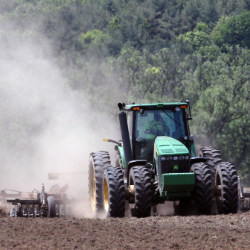
Last week we reviewed an overlooked measure: agricultural productive capital. Using some Bureau of Economic Analysis (BEA) data, we developed an index of gross capital investment, which showed a major investment surge in agricultural equipment purchases in 2012–2014. Farm investments peaked in 2014 at a remarkable $34.38 billion, based on a series of factors that included high commodity prices, expansive export markets, relatively low interest rates, and rising demand for biofuels. The BEA data also showed how the investment cycle turned sharply downward thereafter, with the index of real gross investment falling from 138 in 2014 to 76.8 in 2018. Since then, agricultural productive capital has risen but at a lower rate than investment...



 Last week, the Senate Ag Committee passed the farm bill on a party-line vote upon the return of Senators Mitch McConnell (R-Kentucky) and Tommy Tuberville (R-Alabama), who missed the vote on 6 August (see WPI coverage here) when it failed by a similar party-line vote, 10-11. Democrats held the...


 What You Need to Know Today: The September Cattle on Feed report was strongly bullish, with both the 1 September on-feed inventory and August placements coming in well below average expectations and below the bottom of their respective pre-report estimate ranges. China continues to buy U...

From WPI Consulting
Communicating importance of value-added products

Facing increasing pressure to quantify the value of export promotion efforts to investors, a U.S. industry organization retained WPI to develop a quantitative model that better communicated the importance of exports. The resulting model concluded that value-added meat exports contributed $0.45 cents per bushel to the price of corn, increasing support for that sector’s financial support of WPI’s client. In addition to serving the red meat industry with this type of analysis, WPI has generated similar deliverables for the U.S. soybean and poultry/egg industries.