




 Once again, Trump, Iran, and the Middle East were the hub around which the CBOT trade revolved on Wednesday. Late Tuesday, the U.S. agreed to a two-week ceasefire agreement with Iran, just days after President Trump threatened to escalate attacks against the Middle Eastern country. In the annou...
 Policy Deference The bilateral trade balance is a narrow way to look at the relative relationship between two countries. The government of Mexican President Claudia Sheinbaum Pardo is seeking to ignore its own regulations that guide the application of the General Law on Adequate and Sustainable...
 Regional News Egypt is increasingly finding itself caught between Russia and Ukraine, in a battle for supplying its domestic wheat markets. Egypt, the world’s largest wheat importer, is facing political pressure and wooing from both Russian President Putin and Ukrainian President Ze...
 Russian Grain Markets: 30 March - 3 April 2026 Market overview The Russian grains market remained broadly stable during the week, with a slightly firmer undertone. Export values were mostly steady, while the domestic market moved modestly higher. Broader geopolitical tensions had only a limited...

From WPI Consulting
Forecasting developments in production agriculture
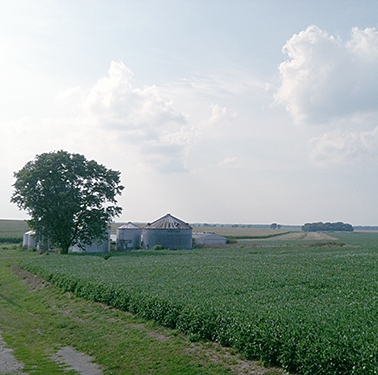
On behalf of a private U.S. agricultural technology provider, WPI’s team generated an econometric model to forecast the movement of concentrated corn production north and west from the traditional U.S. Corn Belt. WPI’s model has subsequently provided quantitative support to a multi-million-dollar investment into short-season corn variety development. WPI’s methodology included a series of interviews with regional grain elevators and seed consultants. Emphasizing outreach and communication with stakeholders who possess intimate sectoral knowledge – on-the-ground insights – is a regular component of WPI’s methodologies, made possible by WPI’s ever-growing network of industry contacts.