



Russian Grain Markets: 25–29 March 2024 Last week, the Russian domestic grain market was volatile. Most of the grains were recovering following global trends and demand in the export zone of Russia. However, even with zero duty which lasted only one week, feed corn continued losing ground. A weaker RUB is part of the reason why domestic prices have gone upwards. Intervention purchases resumed on 27 March, however, this did not have any visible effect on the market. Last week, only 45,800 MT were purchased by the government. No sooner had prices started to recover than the government came back with higher export duties which means the recovery process may become a challenge in the near future. Export duty levels for 3-9 April recover...


 What You Need to Know Today: Corn, wheat, and the soy complex all formed new contract or at least rally highs to close what has become one of the most uniformly bullish weeks in CBOT history. Escalations in the fighting between Russia and Ukraine and attacks on civilian merchant vessels show n...
 Macro: Trade Flows Set the Tone Persian Gulf crude flows appear to be improving, with anecdotal estimates suggesting as much as 7–8 million barrels per day may now be leaving the region — nearly double the mid-July pace. That helps explain why crude has not maintained the full geopo...

From WPI Consulting
Infrastructure investment due diligence
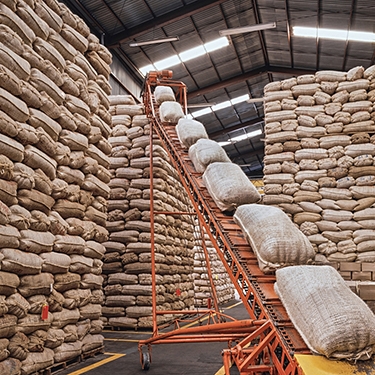
On behalf of a Canadian oilseed processer WPI's team provided market analysis, econometric modeling and financial due diligence in support of a $24 million-dollar investment in a Ukrainian crush plant. Consistent with WPI's findings, local production to supply the plant and the facility's output have expanded exponentially since the investment. WPI has conducted parallel work on behalf of U.S., South American and European clients, both private and public, in the agri-food space.