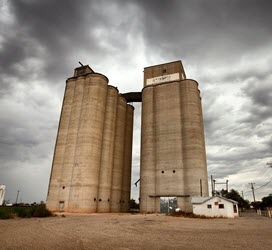
Much like the U.S. historically, Brazil’s capacity to store its grain (wheat, coarse grains, rice, soybeans) output has been increasing with its production gains. According to the Brazilian Institute of Geography and Statistics, the number of silos being built is growing faster than bulk or flat warehouses. Other types of storage, including inflatable bag facilities, still comprise nearly 2 percent of the facilities. U.S. storage capacity is 113 percent of production but has slow growth. Because of its huge storage capacity, the U.S. has been considered the supplier of last resort. Over half of U.S. grain storage is on farms and the remainder at commercial operations. Brazilian storage capacity is at 64 percent of grain output...



 Yesterday we wrote about the Q1 GDP numbers and the June employment reports in an article entitled Real GDP for Q1 Relying on AI Buildout, Held Back by Consumer Spending. That article mentioned that consumer spending had become a drag on GDP. Nonetheless, real GDP in Q1 was revised upward to 2...
 The final reading for real GDP growth in Q1 was revised upward to a 2.1 percent rate from a prior estimate of 1.6 percent, but the underlying details show a weaker mix. The stronger headline reflected a large upward revision to net exports, along with smaller upward adjustments to inventories a...


 Corn Argentina Argentina's corn harvest has reached 52.9 percent of the national harvestable area, with an average yield of 8.15 MT/ha. Harvest continues at a moderate pace because of high grain and field moisture, particularly across central and southern Buenos Aires Province. Over the past se...
 On 4 July 2026, the United States will commemorate the 250th anniversary of the signing of the Declaration of Independence. In observance of the Fourth of July holiday, Ag Perspectives will not be published on Friday, 3 July. We will resume our normal publication schedule on Monday, 6 July...

From WPI Consulting
Forecasting developments in production agriculture
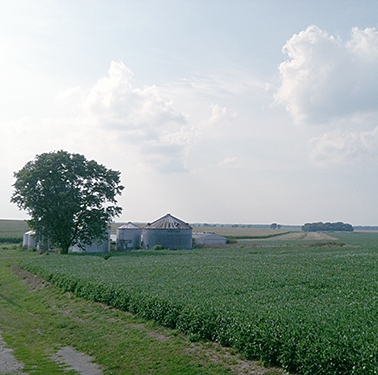
On behalf of a private U.S. agricultural technology provider, WPI’s team generated an econometric model to forecast the movement of concentrated corn production north and west from the traditional U.S. Corn Belt. WPI’s model has subsequently provided quantitative support to a multi-million-dollar investment into short-season corn variety development. WPI’s methodology included a series of interviews with regional grain elevators and seed consultants. Emphasizing outreach and communication with stakeholders who possess intimate sectoral knowledge – on-the-ground insights – is a regular component of WPI’s methodologies, made possible by WPI’s ever-growing network of industry contacts.