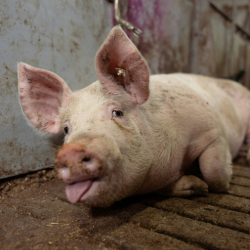
Key Takeaways:
Brazil’s pork exports have more than doubled since 2019 as competitive feed costs, ASF-free status, and expanding global demand have strengthened the country’s position in international markets. Brazil’s abundant domestic production of corn and soybeans provides a major cost advantage, while its disease-free status has allowed exporters to gain market share as ASF disrupted production and trade in competing regions. Brazil’s initial growth as an exporter was driven by China’s battle with ASF, but it has diversified beyond China into other key markets, including Japan and the Philippines. Brazil’s structural advantages extend beyond production costs, with established export infrastructure,...



 What You Need to Know Today: CBOT markets pared Monday’s sharp losses as traders booked short profits and adjusted positions ahead of the Grain Stocks report that USDA will release Wednesday afternoon. The 7-day QPF forecast from NOAA now shows heavy rain across the central and western C...
 Key Takeaways: Comparative advantage encourages countries to specialize in goods they can produce at a lower opportunity cost and rely on trade for others. Differences in climate, land, infrastructure, and technology help determine where agricultural commodities can be produced most efficientl...
 Mediterranean/Middle East/North Africa/Africa – MEA Region Iran is reported to have completed its rail link from the border with Afghanistan to the Iranian port of Chabahar on the Gulf of Oman — the link is expected to be fully operational in early 2027. This will be Afghanistan&rsq...