
BRICS Unload President Trump has slow walked or balked at negotiating trade agreements with Brazil, India and South Africa. The supposed reasons include unfair treatment of Brazil’s Bolsonaro, India’s failure to open its market to U.S. farm goods while buying Russian oil, and South Africa threatening whites. Mostly, he doesn’t like the BRICS coalition because it seeks to undermine American hegemony. India’s Prime Minister Modi has turned the Trump snub by turning it into a domestic badge of courage defending his country’s farmers. And he could boost exports further by weakening the rupee. Brazilian President Lula da Silva has responded to U.S. tariff increases by bringing a complaint to the WTO for breaking tha...



 What You Need to Know Today: Wheat futures pulled back sharply after Russian President Putin said there was a “chance” for peace and an agreement to end the war in Ukraine. There is plenty of skepticism about the opportunity for peace in Ukraine, but that didn’t stop wheat fr...

 President Trump has opened the door to 100,000 MT of beef lean trimmings (limited to HTS codes 0201.30.5091, 0201.30.5097, 0202.30.5091, and 0202.30.5097) from countries listed under the “Other Countries” TRQ effective 1 September. These imports would not be subject to the over-quot...

 Key Takeaways: CHS and OCP plan to invest up to $450 million in a Louisiana phosphate fertilizer facility capable of producing more than 1 MMT annually, marking the first new U.S. plant of its kind in more than 40 years. The facility could reduce U.S. dependence on imported finished phosphate...

From WPI Consulting
Forecasting developments in production agriculture
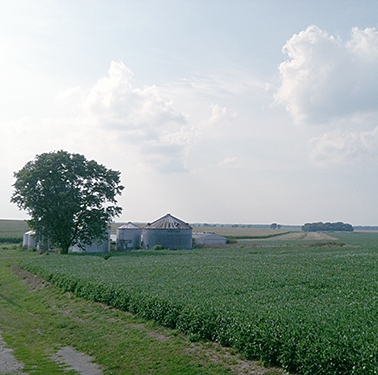
On behalf of a private U.S. agricultural technology provider, WPI’s team generated an econometric model to forecast the movement of concentrated corn production north and west from the traditional U.S. Corn Belt. WPI’s model has subsequently provided quantitative support to a multi-million-dollar investment into short-season corn variety development. WPI’s methodology included a series of interviews with regional grain elevators and seed consultants. Emphasizing outreach and communication with stakeholders who possess intimate sectoral knowledge – on-the-ground insights – is a regular component of WPI’s methodologies, made possible by WPI’s ever-growing network of industry contacts.