

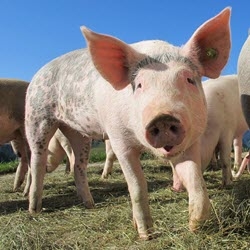
With China importing over 44 percent of the world’s traded pork and at least 13 percent of its traded corn, knowing the size of the hog herd is critical to knowing supply and demand. The USDA/FAS attaché in China has posted a number closer to the official Chinese number, but USDA in Washington has a much smaller calculation. Rabobank’s latest number splits the difference. Rabobank says the herd is 10 to 15 percent larger than a year ago after experiencing 3 – 5 percent monthly declines since December due to a relatively smaller resurgence in Africa Swine Fever (ASF). The accuracy of estimates is not made any easier by Chinese policy pronouncements seemingly contradicted by domestic prices. Soymeal prices have softe...



 What You Need to Know Today: President Trump claimed the ceasefire between the U.S. and Iran was over, as both sides accused one another of violating the terms of the agreement. Commercial vessels are increasingly steering clear of the Strait of Hormuz as security risks escalate following Iran...
 Key Takeaways: The CME Group is launching new 90 percent Lean Beef and 50 percent Lean Beef futures and options contracts in July. There are five key factors that must be present in physical markets and futures contract specifications for futures contracts to become successful. The two l...
 Russian Grain Markets: 29 June-3 July 2026 The new marketing season has officially begun in Russia, although bearish sentiment has been concentrated in the southern regions closest to the Black Sea ports, where export demand has been weakest. Delays in grain deliveries to inland elevators have...

From WPI Consulting
Illuminating the value of technical research

On behalf of a commodity producer organization, WPI evaluated the outputs from a project that featured a $5 million investment into technical research over multiple years. WPI’s team captured the results of this extensive effort and synthesized them for presentation to the organization’s governing board; among the findings uncovered and presented for the first time was the development of genomic traits proven, via rigorous testing, to provide crop yield advantages of 50 percent or more to U.S. farmers in times of drought. Capturing measurable results from long-term efforts can be challenging. Educating clients on the dynamics of success measurement when quantifiable results are not readily available requires deep client-consultant collaboration and an ability to consider both near- and long-term client aspirations with market/policy dynamics – attributes that WPI brings to every consulting engagement.