

China’s announcement last week that it would not add punitive tariffs on imports of pork from the U.S. was largely a necessary self-restraint. With nearly one third of the domestic herd culled and prices 40 percent higher, China has increased its pork import purchases. Key suppliers are the EU, Canada and Brazil but according to some estimates, China’s pork imports will need to double from 1.1 MMT in 2018 to 4.2 MMT in 2020. The EU, Brazil and other countries can increase production, but the U.S. and Canada are the only countries with readily available surplus stocks of pig meat. The U.S. has 245,000 tons of readily available surplus pork and has the lowest cost of production. Not to say that Beijing couldn’t pay premium...



From WPI Consulting
Infrastructure investment due diligence
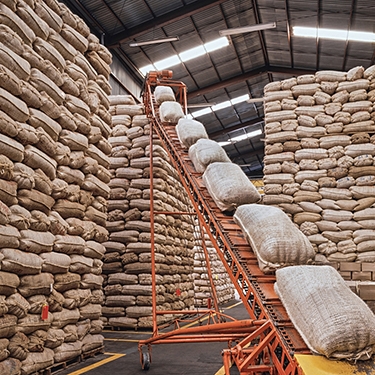
On behalf of a Canadian oilseed processer WPI's team provided market analysis, econometric modeling and financial due diligence in support of a $24 million-dollar investment in a Ukrainian crush plant. Consistent with WPI's findings, local production to supply the plant and the facility's output have expanded exponentially since the investment. WPI has conducted parallel work on behalf of U.S., South American and European clients, both private and public, in the agri-food space.