


Beijing proclaims the goal of food self-sufficiency at a 95-percent level on a grain basis but there is inadequate data upon which to judge this feat. Goro Takahashi at Aichi University calculates that China’s food self-sufficiency is declining at more than 1 percent per year (see graph below). The Japanese would know since they have struggled with their own food self-sufficiency that has declined from 80 percent in 1960 to 37 percent today. While China claims agricultural production on a high percentage (54.7) of its land area, the amount of arable land available per person is less than half that of Japan. Key issues are soil quality and water availability. In recent years, China’s food exports have declined by 34 percen...



 Russian Grain Markets: 29 June-3 July 2026 The new marketing season has officially begun in Russia, although bearish sentiment has been concentrated in the southern regions closest to the Black Sea ports, where export demand has been weakest. Delays in grain deliveries to inland elevators have...
 What You Need to Know Today: The hot, dry weather forecast continues to drive strength in grain futures with corn and soybeans hitting another day of strong gains. Monday’s Crop Progress and Conditions data were in line with market expectations and showed relatively few concerns for the...
 Yesterday we wrote about the Q1 GDP numbers and the June employment reports in an article entitled Real GDP for Q1 Relying on AI Buildout, Held Back by Consumer Spending. That article mentioned that consumer spending had become a drag on GDP. Nonetheless, real GDP in Q1 was revised upward to 2...

From WPI Consulting
Infrastructure investment due diligence
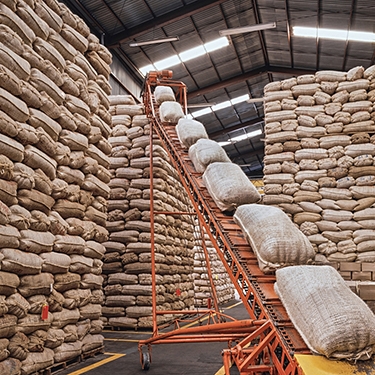
On behalf of a Canadian oilseed processer WPI's team provided market analysis, econometric modeling and financial due diligence in support of a $24 million-dollar investment in a Ukrainian crush plant. Consistent with WPI's findings, local production to supply the plant and the facility's output have expanded exponentially since the investment. WPI has conducted parallel work on behalf of U.S., South American and European clients, both private and public, in the agri-food space.