
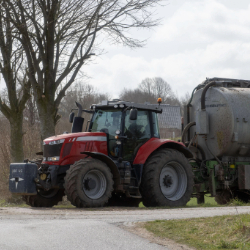
Unlike the 2022 fertilizer shock, today’s disruption is rooted less in rerouted trade flows and more in damaged production capacity, raw material constraints and uncertain recovery timelines. That makes this a longer-duration risk for U.S. agricultural producers and retailers who must secure enough supply for farmers without overcommitting to high-priced inventory if demand weakens. If prices remain elevated through the fall, farmers could have a greater incentive to push applications to the spring. This reality would create an even more bullish outlook for agricultural retailers to manage fertilizer applications and get supplies where they are needed ahead of any short planting windows. Fertilizer companies stated on recent investor...



 What You Need to Know Today: A drier early-October forecast should help harvest accelerate across areas of the western Corn Belt that have been running behind, adding pressure to soybeans and soymeal today as concerns over near-term physical tightness begin to ease. Markets are still digesting...

 USDA released its Quarterly Hogs and Pigs report for 1 September last week. The total inventory of hogs and pigs in the U.S. was 74.3 million head, reflecting a 1 percent decrease from the previous year but a 1.6 percent increase from June 2026, when the June inventory was at its lowest since 2...
 Key Takeaways: Dry bulk markets are mixed this week with the Capesize sector seeing a sharp correction from its recent rally. Smaller vessel classes are steady/firmer but the Chinese Golden Week Holiday is pressuring near-term rates. Dry bulk freight did not receive the bullish boost it...

From WPI Consulting
Illuminating the value of technical research

On behalf of a commodity producer organization, WPI evaluated the outputs from a project that featured a $5 million investment into technical research over multiple years. WPI’s team captured the results of this extensive effort and synthesized them for presentation to the organization’s governing board; among the findings uncovered and presented for the first time was the development of genomic traits proven, via rigorous testing, to provide crop yield advantages of 50 percent or more to U.S. farmers in times of drought. Capturing measurable results from long-term efforts can be challenging. Educating clients on the dynamics of success measurement when quantifiable results are not readily available requires deep client-consultant collaboration and an ability to consider both near- and long-term client aspirations with market/policy dynamics – attributes that WPI brings to every consulting engagement.