Great Timing The workers’ union at the JBS meatpacking plant in Greeley, Colorado, is on strike. The union is demanding more pay for its members, of course, and they want the company to pay for gloves. Given the shortage of cattle, there is overcapacity in cattle slaughter, and JBS has been losing money at the plant, with margins only recently improving. The company can shift slaughter to other underutilized plants. The same politicians that complained loudly when Tyson Foods recently closed a money-losing beef packing plant in Nebraska will likely next argue that beef prices are high because JBS refuses to pay its workers higher wages. Notably, workers are more situationally aware than their union because JBS says some employees are...



 What You Need to Know Today: The September Cattle on Feed report was strongly bullish, with both the 1 September on-feed inventory and August placements coming in well below average expectations and below the bottom of their respective pre-report estimate ranges. China continues to buy U...


 USDA’s September cattle on feed report was released Friday, with the total number of cattle in feedlots with 1,000 head or more capacity amounting to 11.2 million head, 101 percent of last year. Placements dropped in August to their lowest total for the month since records began in 1996...
 Key Takeaways: The U.S. herd is stabilizing, but growth remains modest. Total goat inventory rose 1 percent in 2026, while meat-goat numbers increased 2 percent, which is not enough to materially reduce import dependence. Domestic slaughter is rising from a low base. Commercial slaughter incre...

From WPI Consulting
Infrastructure investment due diligence
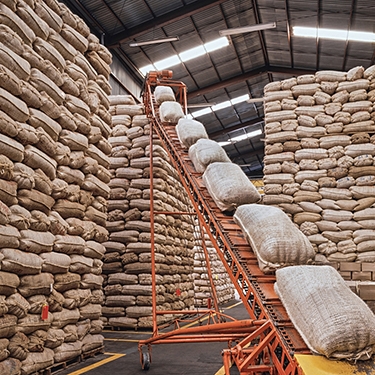
On behalf of a Canadian oilseed processer WPI's team provided market analysis, econometric modeling and financial due diligence in support of a $24 million-dollar investment in a Ukrainian crush plant. Consistent with WPI's findings, local production to supply the plant and the facility's output have expanded exponentially since the investment. WPI has conducted parallel work on behalf of U.S., South American and European clients, both private and public, in the agri-food space.