


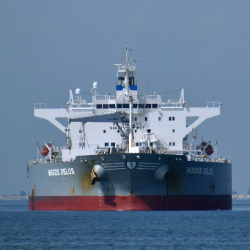
President Trump and Iranian Foreign Minister Abbas Araghchi announced on social media Friday that the Strait of Hormuz is now fully open to commercial vessels. Araghchi’s post said the strait will stay open for the remainder of the U.S.-Iran ceasefire. President Trump said, “the Strait of Hormuz is completely open and ready for business and full passage, but the naval blockade will remain in full force and effect as it pertains to Iran, only until such time as our transaction with Iran is 100 percent complete.” Iran declared the strait open to commercial ships Friday in response to the U.S.-brokered ceasefire, but Tehran said it closed the sea lane a day later after President Donald Trump refused to lift the blockade of Ir...



 What You Need to Know Today: Grain markets were sharply higher overnight and through the day session as the concerning wet weather pattern persists over the Midwest. Grain traders – and soybean market players in particular – will be closely parsing both what is said and unsaid from...

 Key Takeaways: Higher interest rates increase the cost of financing agricultural production, reducing farm margins without providing any corresponding increase in production or revenue. The financial impact of higher rates varies considerably by operation, with highly leveraged producers and t...

 Last week, the Senate Ag Committee passed the farm bill on a party-line vote upon the return of Senators Mitch McConnell (R-Kentucky) and Tommy Tuberville (R-Alabama), who missed the vote on 6 August (see WPI coverage here) when it failed by a similar party-line vote, 10-11. Democrats held the...

From WPI Consulting
Infrastructure investment due diligence
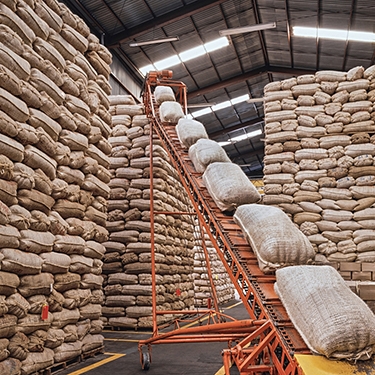
On behalf of a Canadian oilseed processer WPI's team provided market analysis, econometric modeling and financial due diligence in support of a $24 million-dollar investment in a Ukrainian crush plant. Consistent with WPI's findings, local production to supply the plant and the facility's output have expanded exponentially since the investment. WPI has conducted parallel work on behalf of U.S., South American and European clients, both private and public, in the agri-food space.