
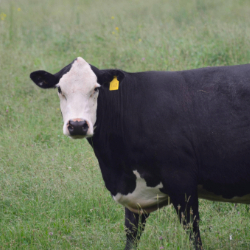
JBS USA announced on Sunday that it has reached a new collective bargaining agreement with UFCW Local 7, allowing the Greeley beef production facility to return to normal operations. The plant had been on strike since 16 March, with approximately 3,800 workers affected. The plant has the capacity to process about 6,000 head per day, or about 7 percent of the total capacity. The strike hit as Tyson’s announced plans to shut down its Lexington, Nebraska plant, Swift closed its Riverside, California plant, and Cargill closed its Milwaukee, Wisconsin plant. The new agreement, which runs through April 2028, reflects the same economic framework JBS USA presented in its “last, best and final offer,” which remained unchanged econo...



 What You Need to Know Today: Grain markets were sharply higher overnight and through the day session as the concerning wet weather pattern persists over the Midwest. Grain traders – and soybean market players in particular – will be closely parsing both what is said and unsaid from...

 Key Takeaways: Higher interest rates increase the cost of financing agricultural production, reducing farm margins without providing any corresponding increase in production or revenue. The financial impact of higher rates varies considerably by operation, with highly leveraged producers and t...
 Last week, the Senate Ag Committee passed the farm bill on a party-line vote upon the return of Senators Mitch McConnell (R-Kentucky) and Tommy Tuberville (R-Alabama), who missed the vote on 6 August (see WPI coverage here) when it failed by a similar party-line vote, 10-11. Democrats held the...

From WPI Consulting
Infrastructure investment due diligence
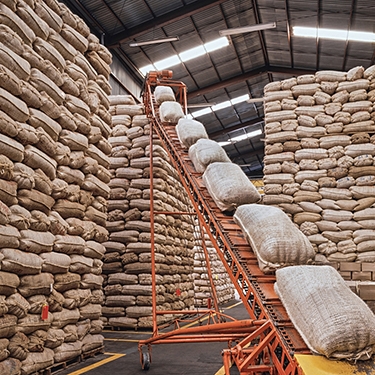
On behalf of a Canadian oilseed processer WPI's team provided market analysis, econometric modeling and financial due diligence in support of a $24 million-dollar investment in a Ukrainian crush plant. Consistent with WPI's findings, local production to supply the plant and the facility's output have expanded exponentially since the investment. WPI has conducted parallel work on behalf of U.S., South American and European clients, both private and public, in the agri-food space.