
President Trump said yesterday, his reciprocal tariffs will launch this Wednesday, calling it “Liberation Day.” Those new tariffs will affect "all countries." However, the Administration has yet to reveal many of the key details of his plan, or when actual duties will be implemented. Indeed, the devil is in the details. Trump's economic policy, aimed at protecting domestic companies, has already sparked a trade war. The EU and China have announced counter-tariffs, and Canadian officials have promised a swift response if planned auto tariffs take effect on Wednesday. What remains a bit of a mystery is how the economy will react. As Trump said, “the goal is for more U.S.-made products and services.” However...



 What You Need to Know Today: Wholesale inflation was flat in July, with the Producer Price Index (PPI) unchanged versus expectations for a 0.2 percent increase. Core PPI rose 0.2 percent, also below expectations. The softer inflation data has reduced the odds of a September interest rate incre...

 Key Takeaways: The U.S. sheep industry is contracting. Lamb output and producer participation have declined sharply. Imports now account for most U.S. lamb consumption. Their roughly 70 percent share raises concerns about domestic capacity and resilience. USTR’s referral carries substant...
 Yesterday, the USDA released its monthly World Supply and Demand Estimates (WASDE), forecasting tighter beef and pork supplies and growing broiler supplies, resulting in a tighter red meat supply. Broiler production, however, continues to grow and is forecast to be up more than 3 percent. Beef...

From WPI Consulting
Forecasting developments in production agriculture
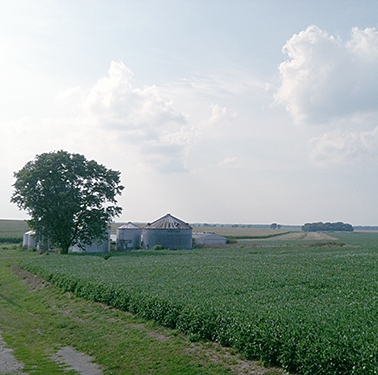
On behalf of a private U.S. agricultural technology provider, WPI’s team generated an econometric model to forecast the movement of concentrated corn production north and west from the traditional U.S. Corn Belt. WPI’s model has subsequently provided quantitative support to a multi-million-dollar investment into short-season corn variety development. WPI’s methodology included a series of interviews with regional grain elevators and seed consultants. Emphasizing outreach and communication with stakeholders who possess intimate sectoral knowledge – on-the-ground insights – is a regular component of WPI’s methodologies, made possible by WPI’s ever-growing network of industry contacts.