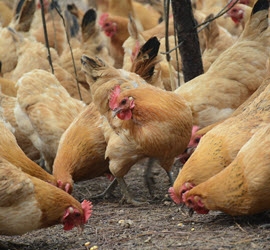
The broiler production is looking strong for the new year. Chick hatching for placements in October was up 6 percent year-over-year. That’s the largest increase since May, when year-over-year comparisons reflected the height of the COVID disruptions in 2020. It takes about seven weeks for those chicks to reach slaughter.
Weekly egg sets have averaged about 4 percent above 2020 levels since April; egg sets are about a 10 week lead time to slaughter, but as we reported on 12 October, there has been a fertility problem in the broiler industry. The hatchability of egg sets has been running below last year. Simply, hatchability is calculated by dividing chicks hatched during the week by eggs set three weeks earlier. ...



 What You Need to Know Today: Markets got a surprise with a corn yield of 181.2 bushels/acre in the October WASDE, above the average estimate of 177.6 bushels/acre and up from USDA’s September estimate of 178.5 bushels/acre. Although stronger demand is expected to absorb some of the addit...

 Key Takeaways: On Friday afternoon, President Trump announced that Russia will “immediately supply over 300,000 Tons of Diesel Fuel” to the United States. The deal, typical of this administration, is light on details but promises an additional 500,000 tons in November and 1 m...
 The USDA has lowered its 2026 red meat production forecasts slightly while forecasting a slight increase in broiler production. Beef is now projected at 24.802 billion pounds, 75 million pounds less than in September. Cow slaughter is expected to be up; however, this will be offset by lower ste...