
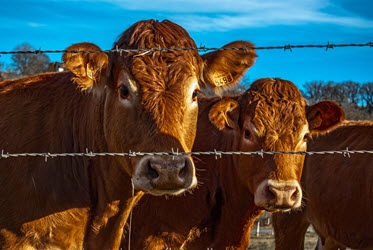
Someday in the near future we can envision an entire introduction to micro-economics textbooks using the COVID-era meat sector to illustrate virtually all the basic theories of the discipline. Of course, there is supply and demand allocation (panic buying at groceries), shifting supply curves (lower livestock slaughter), marginal costs (plant reconfigurations), opportunity costs (meat plant employees choosing to not to work for health reasons), shifting demand curves (closed restaurants), and income effect (massive layoffs). Also, there are the price elasticities of demand – note the percent changes in sales volume among the major species from 1 March to 24 May with beef down 1.5 points, chicken down 1.6 points, and pork up 3.8 points...



 What You Need to Know Today: President Trump claimed the ceasefire between the U.S. and Iran was over, as both sides accused one another of violating the terms of the agreement. Commercial vessels are increasingly steering clear of the Strait of Hormuz as security risks escalate following Iran...
 Key Takeaways: The CME Group is launching new 90 percent Lean Beef and 50 percent Lean Beef futures and options contracts in July. There are five key factors that must be present in physical markets and futures contract specifications for futures contracts to become successful. The two l...

From WPI Consulting
Communicating importance of value-added products

Facing increasing pressure to quantify the value of export promotion efforts to investors, a U.S. industry organization retained WPI to develop a quantitative model that better communicated the importance of exports. The resulting model concluded that value-added meat exports contributed $0.45 cents per bushel to the price of corn, increasing support for that sector’s financial support of WPI’s client. In addition to serving the red meat industry with this type of analysis, WPI has generated similar deliverables for the U.S. soybean and poultry/egg industries.