
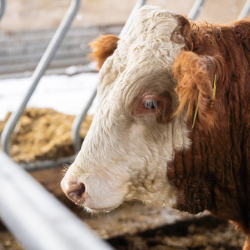
In yesterday’s WASDE, USDA reduced its overall red meat and poultry production forecast for 2026 as declines in beef and broiler output more than offset increases in pork and turkey production. Fourth-quarter beef production was revised downward because of slower fed cattle marketings and lighter dressed weights. USDA also lowered its 2027 beef production forecast, citing fewer-than-expected cattle placements during the second half of 2026, which are expected to reduce marketings in early 2027. Pork production for 2026 was revised upward because of a larger-than-expected supply of market-ready hogs in the fourth quarter. The 2027 pork production forecast remained unchanged. However, broiler production forecasts were lowered for both y...


 What You Need to Know Today: The U.S. dollar continued to strengthen Thursday as persistent inflation reinforced expectations for additional Federal Reserve interest rate hikes. Higher Treasury yields have helped support the dollar, potentially reducing the competitiveness of U.S. agricultural...
 Key Takeaways: Dry bulk freight markets were stronger this week, but the rally was uneven and due to divergent dynamics across basins and vessel classes. Panamax markets were broadly higher, but Atlantic grain demand was primarily responsible while Asian activity was subdued. That trend...

 Key Takeaways: World prices are strong; U.S. grower data doesn’t show it. Australia's benchmark finished the 2025/26 season 61 percent higher, while the value of the 2025 U.S. clip fell 7 percent. The U.S. clip is coarser than the wool behind the headlines. Only about 7 percent was finer...

From WPI Consulting
Weighing in on strategic realignment

WPI’s team was retained by the governing board of a U.S. industry organization to review a decision, reached by vote, to invest significant assets into the development and management of an export trading company. WPI’s team conducted a formal review of this decision and concluded that the current level of market saturation would limit the benefits of the investment. Based on WPI’s analysis and recommended actions, the board subsequently reversed its decision and undertook a strategic planning effort to identify more impactful investments. On behalf of numerous clients, WPI has not only assisted in identifying strategic paths but also advised their implementation.