



Bears once again dominated trade at the CBOT on Wednesday with a favorable U.S. weather forecast and somewhat surprisingly cheap wheat from Russia proving the impetus for the day’s selling. The soy complex saw perhaps the most dramatic and persistent declines for the day, with a combination of export competition from South America, “sell the fact” trade regarding Indonesia and China’s trade kerfuffle, and biofuel disappointing driving the day’s declines. Wheat pushed lower on expectations of a larger U.S. crop forecast in Friday’s WASDE and from quotes of inexpensive Russian wheat. Corn saw perhaps the most stability for the day, but new crop futures still scored a few cents decline with March and May hit...



 What You Need to Know Today: There has already been a strong run of flash soybean sales announcements in recent weeks, but more than 1.4 MMT reported this morning is an exceptionally large single-day total with major implications for the market. If the sales to China and unknown destinations w...
 On Friday, at 6:57 AM, President Donald Trump announced, via a social media post, a 90-day window during which up to 300,000 metric tons of product for ground beef could be imported outside of tariff-rate quotas—a move aimed at bringing down costs for American consumers. This is the secon...

From WPI Consulting
Forecasting developments in production agriculture
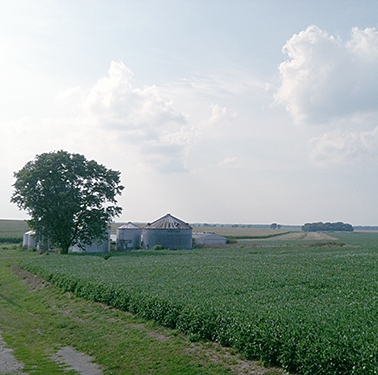
On behalf of a private U.S. agricultural technology provider, WPI’s team generated an econometric model to forecast the movement of concentrated corn production north and west from the traditional U.S. Corn Belt. WPI’s model has subsequently provided quantitative support to a multi-million-dollar investment into short-season corn variety development. WPI’s methodology included a series of interviews with regional grain elevators and seed consultants. Emphasizing outreach and communication with stakeholders who possess intimate sectoral knowledge – on-the-ground insights – is a regular component of WPI’s methodologies, made possible by WPI’s ever-growing network of industry contacts.