


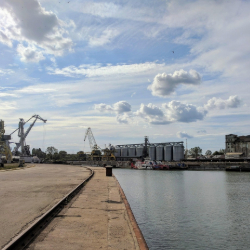
The primary drivers of Monday’s grain trade were, of course, the U.S. and Israel’s weekend attacks on Iran that killed the latter country’s Supreme Leader Khamenei and the subsequent cascade of impacts on global markets. WPI covers these impacts in more detail in our nearby article, but here we briefly note that energy markets rallied sharply on the threat to global crude oil and LNG supplies, and freight markets are avoiding the Persian Gulf and, more broadly, the Middle East. The weekend events don’t have much impact on global grain trade other than increasing the difficulty of supplying some importers with human and animal feed needs, but routing vessels around the Suez Canal and Red Sea (again) will tighten dry-b...



From WPI Consulting
Infrastructure investment due diligence
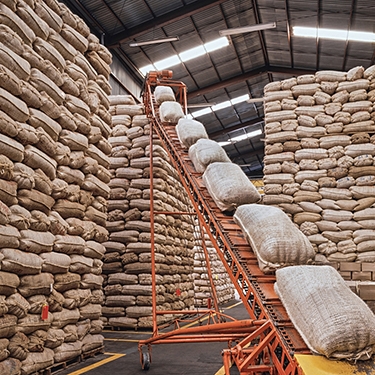
On behalf of a Canadian oilseed processer WPI's team provided market analysis, econometric modeling and financial due diligence in support of a $24 million-dollar investment in a Ukrainian crush plant. Consistent with WPI's findings, local production to supply the plant and the facility's output have expanded exponentially since the investment. WPI has conducted parallel work on behalf of U.S., South American and European clients, both private and public, in the agri-food space.