


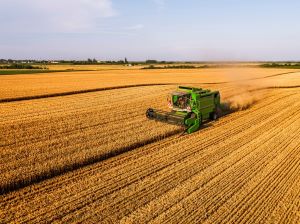
The big news for Monday’s ag market trade wasn’t the U.S.-EU trade deal, but rather continued favorable weather in the U.S. Midwest that will boost corn and soybean yield potential to record or near-record levels. The weather has private analysts boosting yield expectations by several bushels per acre and, consequently, adding to the U.S. supply outlook. That dynamic drove corn and soybean futures lower to start the week while the wind down of the wheat harvest left CBOT and KCBT futures mostly sideways. The big moves for the day again came from the cattle markets, where bullish USDA data prompted another round of strong fund and spec buying. While the weather was the primary focus for the day, the market continues to look...


 WPI Grain Prices and Freight Rate App Note: you can also visit the app directly by clicking here. Supplemental Information The section below offers a concise view of the options available in the current version of the WPI FOB Price and Freight Rate app, along with a short “How To”...
 What You Need to Know Today: U.S. corn condition ratings took a surprise turn for the worse in Monday’s report, with 54 percent rated good/excellent (down 3 percent). Dry weather in the U.S. Wheat Belt is stalling planting and causing concerns for the 2027 crop, in turn boosting futures...


 In a letter last week to President Trump, Zippy Duvall, president of the American Farm Bureau Federation (AFBF), wrote that diesel prices are squeezing farmers’ margins. As Duvall wrote: Higher diesel expenses are hitting farmers at one of the most fuel-intensive times of the year —...

From WPI Consulting
Illuminating the value of technical research

On behalf of a commodity producer organization, WPI evaluated the outputs from a project that featured a $5 million investment into technical research over multiple years. WPI’s team captured the results of this extensive effort and synthesized them for presentation to the organization’s governing board; among the findings uncovered and presented for the first time was the development of genomic traits proven, via rigorous testing, to provide crop yield advantages of 50 percent or more to U.S. farmers in times of drought. Capturing measurable results from long-term efforts can be challenging. Educating clients on the dynamics of success measurement when quantifiable results are not readily available requires deep client-consultant collaboration and an ability to consider both near- and long-term client aspirations with market/policy dynamics – attributes that WPI brings to every consulting engagement.