
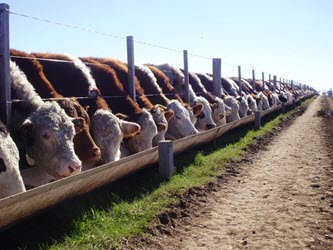
McDonalds has entered the sustainability space by partnering with Syngenta and paying cattle producers to use Syngenta’s Enogen Trait corn to improve feed efficiency. Enogen corn contains an enzyme, alpha amylase. This enzyme has been added during the ethanol production process to induce starch breakdown. The enzyme makes the breakdown of starch to sugars more efficient. The process was developed in the early 2000. It is kept out of the food stream, though it is approved for food use.Enogen has been marketed for silage production since the mid-2010s in the U.S. and introduced in Canada in 2023 and will be expanded in 2025. Enogen corn feed is about five percent more efficient for backgrounders, stockers, and feeders, than corn without the t...



 What You Need to Know Today: Brazilian President Luiz Inácio Lula da Silva secured reelection on Sunday, defeating right-wing Senator Flávio Bolsonaro despite trailing in the first round of voting. The surprise victory triggered a sharp selloff in Brazilian financial market...

 The 2026 midterm elections are a week from tomorrow, but early voting has been taking place for weeks. At stake is control of Congress, including the House of Representatives, where all 435 seats are contested, and the Senate, where approximately one-third of the seats are up for election. Farm...
 Key Takeaways: Total U.S. crop acres (excluding hay) are forecast to expand fractionally this year due to greater oilseed crop and winter wheat plantings. One of the key drivers of this year’s crop outlook is input costs, and crops with a lower cost profile have an advantage in producers...

From WPI Consulting
Infrastructure investment due diligence
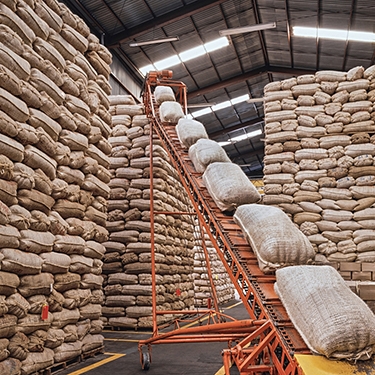
On behalf of a Canadian oilseed processer WPI's team provided market analysis, econometric modeling and financial due diligence in support of a $24 million-dollar investment in a Ukrainian crush plant. Consistent with WPI's findings, local production to supply the plant and the facility's output have expanded exponentially since the investment. WPI has conducted parallel work on behalf of U.S., South American and European clients, both private and public, in the agri-food space.