
Few philanthropists are as focused on hunger in Sub-Saharan Africa than Bill Gates. The Bill and Melinda Gates Foundation has spent billions of dollars on the problem. Activists do not like his promotion of GMO’s as a solution, but they are not as focused as he is on human suffering. This week, Gates noted in the foundation’s annual Goalkeepers’ report that most impacts from climate change are in the food chain, and children are the chief victims. Progress has been achieved on reducing child hunger in Africa. The problem is that the region’s productivity gains for main staple crops has a CSAGR of 1.95 percent, but the population is expanding at 2.5 percent. Some research shows that foregoing the bearing...



 What You Need to Know Today: Crude oil prices extended their rally today, supported by several developments, including escalating Houthi attacks on Saudi Arabian oil infrastructure and growing concerns about supply disruptions. The Trump administration is reportedly preparing to remove 50 perc...
 Key Takeaways: The agricultural trade surplus has become a sizable deficit: the balance swung from a $40.1 billion surplus in 2011 to a $40.7 billion deficit in 2025. Imports kept growing while exports lost momentum: between 2020 and 2025, agricultural imports increased 45 percent, compa...
 What You Need to Know Today: New World screwworm is back in the headlines after new cases were found in a hunter-harvested elk in Texas and a beef cow in New Mexico. The detection in wildlife could further complicate containment efforts, as implementing effective biosecurity measures is consid...

 Key Takeaways: Demand and capacity decide where milk growth lands. Italian cheese is up 4.2 percent in 2026, and milk output is growing fastest in Kansas, South Dakota and Texas, where the new plants are located. Price spreads decide where the marginal milk goes. The Class IV premium over Clas...

From WPI Consulting
Forecasting developments in production agriculture
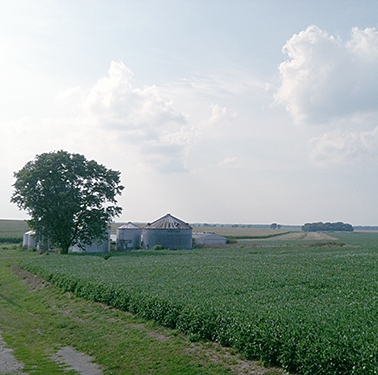
On behalf of a private U.S. agricultural technology provider, WPI’s team generated an econometric model to forecast the movement of concentrated corn production north and west from the traditional U.S. Corn Belt. WPI’s model has subsequently provided quantitative support to a multi-million-dollar investment into short-season corn variety development. WPI’s methodology included a series of interviews with regional grain elevators and seed consultants. Emphasizing outreach and communication with stakeholders who possess intimate sectoral knowledge – on-the-ground insights – is a regular component of WPI’s methodologies, made possible by WPI’s ever-growing network of industry contacts.