
The price of petroleum has plummeted, putting countries that are highly dependent on its export earnings into deep fiscal trouble. This should hinder their amount of foreign exchange and thus food imports beyond basic necessity. However, looking at the recent history of U.S. food exports to these countries and the average annual value of oil, there is no discernible pattern except perhaps a negative correlation. There could be several reasons for this disconnection. First, the U.S. is not a main supplier of food to many of these countries. In fact, Washington has trade embargoes against OPEC members like Iran and Venezuela, plus restrictions on trade with Russia. Even close ally Saudi Arabia shows minimal relationship (R2 = 0.11) between t...



From WPI Consulting
Forecasting developments in production agriculture
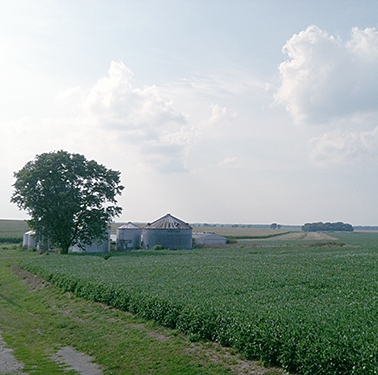
On behalf of a private U.S. agricultural technology provider, WPI’s team generated an econometric model to forecast the movement of concentrated corn production north and west from the traditional U.S. Corn Belt. WPI’s model has subsequently provided quantitative support to a multi-million-dollar investment into short-season corn variety development. WPI’s methodology included a series of interviews with regional grain elevators and seed consultants. Emphasizing outreach and communication with stakeholders who possess intimate sectoral knowledge – on-the-ground insights – is a regular component of WPI’s methodologies, made possible by WPI’s ever-growing network of industry contacts.