
China’s Heilongjiang Province Doubles Subsidy for Soybeans Heilongjiang Province, China’s top soybean and corn producer, has doubled its subsidy for growing soybeans to 320 yuan/mu ($330/acre or $815/hectare at the current exchange rate) as a way to boost production. To further encourage expanded soybean plantings in 2019 at the expense of the corn crop, the province reduced its subsidy for the latter from 134 yuan/mu to 25 yuan mu ($25.80/acre or $63.75/hectare). The province is following the lead of the central Chinese government, which wants to greatly increase soybean production to reduce reliance on imports, particularly from the U.S. This goal is a direct result of the current U.S.-China trade war. Interestingly, the su...



 What You Need to Know Today: USDA reports are delayed until Tuesday due to the federal holiday on Monday. Over the weekend, President Trump announced a ceasefire between Russia and Ukraine. Russia warmly welcomed and confirmed this ceasefire by conducting more strikes against Ukraine. Specific...

 On Saturday, 10 October, at a campaign rally in Clarksville, Tennessee, President Trump said that the U.S. and Mexico would come to terms on a new trade deal, and he said Canada does not need to be part of the deal. Trump called the coming agreement with Mexico “great” but gave no d...
 Key Takeaways: The United States has steadily lost global wheat export market share since the 1970s, falling from the world's leading exporter to a projected fifth place in 2026/27. The rapid expansion of Black Sea wheat exports, driven by improved productivity and export infrastructure, has r...

From WPI Consulting
Forecasting developments in production agriculture
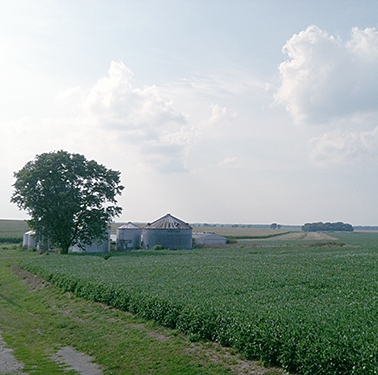
On behalf of a private U.S. agricultural technology provider, WPI’s team generated an econometric model to forecast the movement of concentrated corn production north and west from the traditional U.S. Corn Belt. WPI’s model has subsequently provided quantitative support to a multi-million-dollar investment into short-season corn variety development. WPI’s methodology included a series of interviews with regional grain elevators and seed consultants. Emphasizing outreach and communication with stakeholders who possess intimate sectoral knowledge – on-the-ground insights – is a regular component of WPI’s methodologies, made possible by WPI’s ever-growing network of industry contacts.