

Yesterday, USDA released a statement confirming the detection of New World Screwworm (NSW) in in Sabinas Hidalgo, located in the Mexican state of Nuevo León, less than 70 miles from the U.S.-Mexico border. The case was confirmed by the National Service of Agro-Alimentary Health, Safety, and Quality (SENASICA). This is the northernmost existence of NWS, which started last year along Mexico’s southern border. Sabinas Hidalgo is located near the major highway from Monterrey, Nuevo Leon, to Laredo, Texas, which is one of the most heavily trafficked commercial thoroughfares in the world. The previous northernmost detection was reported on 9 July, in Veracruz, approximately 370 miles farther south. Preliminary repor...



 What You Need to Know Today: Wheat futures pulled back sharply after Russian President Putin said there was a “chance” for peace and an agreement to end the war in Ukraine. There is plenty of skepticism about the opportunity for peace in Ukraine, but that didn’t stop wheat fr...
 President Trump has opened the door to 100,000 MT of beef lean trimmings (limited to HTS codes 0201.30.5091, 0201.30.5097, 0202.30.5091, and 0202.30.5097) from countries listed under the “Other Countries” TRQ effective 1 September. These imports would not be subject to the over-quot...

 Key Takeaways: CHS and OCP plan to invest up to $450 million in a Louisiana phosphate fertilizer facility capable of producing more than 1 MMT annually, marking the first new U.S. plant of its kind in more than 40 years. The facility could reduce U.S. dependence on imported finished phosphate...

From WPI Consulting
Infrastructure investment due diligence
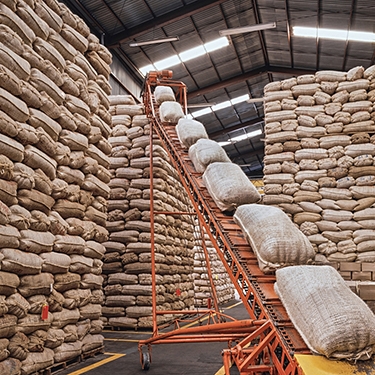
On behalf of a Canadian oilseed processer WPI's team provided market analysis, econometric modeling and financial due diligence in support of a $24 million-dollar investment in a Ukrainian crush plant. Consistent with WPI's findings, local production to supply the plant and the facility's output have expanded exponentially since the investment. WPI has conducted parallel work on behalf of U.S., South American and European clients, both private and public, in the agri-food space.