Contrary to President Trump’s latest boast, trade wars are not good and not easy to win. U.S. agriculture now feels threatened by the effort to protect the American steel and aluminum sector. What is notable, though, is the similarity between food and steel. Production of both is deemed in the national interest; thus, they find state support that eventually results in excess production, and it becomes difficult to unwind the resulting distorted markets. More advanced steelmaking employs alloys like manganese, nickel and chromium, but the fundamentals are basically iron ore plus carbon and the energy to transform them. Japan is the number three steel producer in the world, and yet it has very limited domestic sources of either ore or...



 What You Need to Know Today: Crude oil prices extended their rally today, supported by several developments, including escalating Houthi attacks on Saudi Arabian oil infrastructure and growing concerns about supply disruptions. The Trump administration is reportedly preparing to remove 50 perc...
 Key Takeaways: The agricultural trade surplus has become a sizable deficit: the balance swung from a $40.1 billion surplus in 2011 to a $40.7 billion deficit in 2025. Imports kept growing while exports lost momentum: between 2020 and 2025, agricultural imports increased 45 percent, compa...

 USDA released its October Cattle on Feed report Friday, showing 11.4 million cattle in feedlots with capacity for 1,000 head or more, slightly below last year. September placements were the lowest for the month since records began in 1996, marking the third consecutive month of placements sett...
 Total Red Meat & Poultry September 2026 total red meat and poultry stocks totaled 1.97 billion pounds, down 1.4 percent from August despite typically increasing 0.8 percent during the month, and were 1.5 percent below September 2025 levels. The decline pushed total inventories to a new five...

From WPI Consulting
Infrastructure investment due diligence
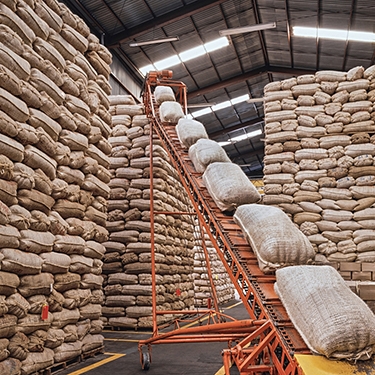
On behalf of a Canadian oilseed processer WPI's team provided market analysis, econometric modeling and financial due diligence in support of a $24 million-dollar investment in a Ukrainian crush plant. Consistent with WPI's findings, local production to supply the plant and the facility's output have expanded exponentially since the investment. WPI has conducted parallel work on behalf of U.S., South American and European clients, both private and public, in the agri-food space.