
Plurilateral for NTBs Australia has launched an effort to address the nontariff trade barriers (NTBs) its exporters face. The Aussie beef industry says NTBs cost it A$3.4 billion per year and the nation’s grain growers curated a list of 54 such barriers across 15 markets. But there is no reason for Australia to go it alone with its plan. As it is, the U.S. government is unwilling to expend resources on foreign trade barriers if the cost of litigation is significantly higher than the economic benefit to be gained. This leaves many pesky and collectively burdensome barriers free to obstruct and hinder trade. Other agricultural exporting nations face the same barriers and there would be both greater political leverage and economies of s...



 Markets are caught between reasons to keep selling and reasons to take another look. Fund liquidation and renewed peace talks are pressuring grains, while fresh export business and some diesel relief offer encouragement. Corn recovered nearly 10 cents from its low to finish higher, while soybea...

 Key Takeaways: President Trump announced $8 billion in additional agricultural assistance through the Harvest Fuel Relief Program, as USDA projects farm fuel and oil expenses will increase 28.8 percent in 2026. The package follows $12 billion in earlier relief, while government farm payments w...

 Key Takeaways: A student group from the University of Chicago is protesting to bring back onion futures trading. Trading in onion futures was banned in 1958 following a spectacular bout of market manipulation that resulted in a corner of the physical market. The ban on onion futures led t...

From WPI Consulting
Infrastructure investment due diligence
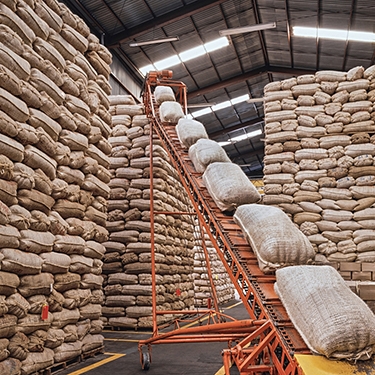
On behalf of a Canadian oilseed processer WPI's team provided market analysis, econometric modeling and financial due diligence in support of a $24 million-dollar investment in a Ukrainian crush plant. Consistent with WPI's findings, local production to supply the plant and the facility's output have expanded exponentially since the investment. WPI has conducted parallel work on behalf of U.S., South American and European clients, both private and public, in the agri-food space.