World Perspectives

Revolutionizing Agriculture

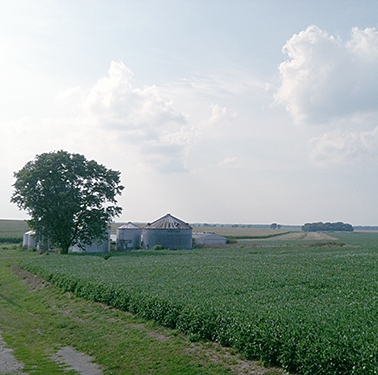
EU agricultural policy has focused on assisting farmers in extracting higher prices for food, based on quality built over centuries, with branding both on historic names and geographic origin, and to some degree shorting the market. U.S. agricultural policy has zeroed in on productivity – extracting the highest yield for the lowest cost. This latter approach has served well during decades in which calories were expensive or at risk, but former USDA secretary Dan Glickman argues that the policy now contributes to national decline. That is because poor diet is the leading cause of mortality in the country. U.S. agricultural policy subsidizes high calories per acre of production when it should be reinforcing the goals of the government&...

Related Articles
feed-grains soy-oilseeds wheat

Market Commentary: China Headlines and Technical Buying Lift CBOT

Key Market Developments Markets head into Friday’s CPI report expecting a 0.3 percent month-over-month increase in both headline and core inflation, keeping year-over-year readings near +2.5 percent. That matters — but perhaps not as much as it would have a few weeks ago. This week&...

Sovereignty and Competitiveness; USMCA Battle

Sovereignty and Competitiveness So-called food sovereignty has animated European politics for decades. Now there is AI sovereignty because English is annoying or a national security risk. Taxes, regulations, and fines are thrown at dominant foreign companies to the point that Bloomberg says som...

livestock

Livestock Round Up: Cattle Margins and Distribution

The recent February World Agricultural Supply and Demand Estimates (WASDE) report forecast beef production to increase in 2026 due to greater slaughter of steers and heifers, increased cow slaughter, and heavier dressed weights, all of which will provide some relief to the beef market. Also, th...

feed-grains soy-oilseeds wheat

Market Commentary: China Headlines and Technical Buying Lift CBOT

Key Market Developments Markets head into Friday’s CPI report expecting a 0.3 percent month-over-month increase in both headline and core inflation, keeping year-over-year readings near +2.5 percent. That matters — but perhaps not as much as it would have a few weeks ago. This week&...

Sovereignty and Competitiveness; USMCA Battle

Sovereignty and Competitiveness So-called food sovereignty has animated European politics for decades. Now there is AI sovereignty because English is annoying or a national security risk. Taxes, regulations, and fines are thrown at dominant foreign companies to the point that Bloomberg says som...

livestock

Livestock Round Up: Cattle Margins and Distribution

The recent February World Agricultural Supply and Demand Estimates (WASDE) report forecast beef production to increase in 2026 due to greater slaughter of steers and heifers, increased cow slaughter, and heavier dressed weights, all of which will provide some relief to the beef market. Also, th...

feed-grains soy-oilseeds wheat

Summary of Futures

Mar 26 Corn closed at $4.3125/bushel, up $0.0375 from yesterday's close.  Mar 26 Wheat closed at $5.525/bushel, up $0.1525 from yesterday's close.  Mar 26 Soybeans closed at $11.3725/bushel, up $0.1325 from yesterday's close.  Mar 26 Soymeal closed at $307.9/short ton, up $4.9 fr...

Image
From WPI Consulting

Communicating importance of value-added products

Facing increasing pressure to quantify the value of export promotion efforts to investors, a U.S. industry organization retained WPI to develop a quantitative model that better communicated the importance of exports. The resulting model concluded that value-added meat exports contributed $0.45 cents per bushel to the price of corn, increasing support for that sector’s financial support of WPI’s client. In addition to serving the red meat industry with this type of analysis, WPI has generated similar deliverables for the U.S. soybean and poultry/egg industries.

Search World Perspectives

Sign In to World Perspectives

Don’t have an account yet? Sign Up