


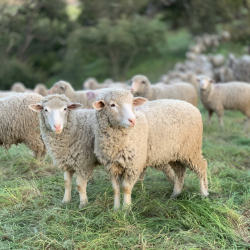
Executive Summary Sheep and goats represent one of the largest livestock protein systems in the world, with an estimated 2.3 billion head globally; however, they remain almost entirely absent from U.S. agricultural policy, trade strategy, and market forecasting. The U.S. small ruminant herd, at roughly 7.5 million head, accounts for less than 0.3 percent of the global population and has continued to contract even as domestic demand for lamb and goat meat rises. The result is a structural and widening import dependency: the U.S. has imported an average of $1.47 billion annually in lamb, mutton, and goat meat over the past five years, with Australia and New Zealand supplying the overwhelming majority of that volume. For traders, investors, an...


 Beef packer margins deteriorated to $156.75/head last week, down $46.05 from the prior week as fed cattle prices strengthened while gains in the Choice cutout were comparatively modest. The Choice cutout increased...


 What You Need to Know Today: Oil prices moved higher early Monday before giving back some of their gains after drone attacks forced the shutdown of Saudi Arabia’s East-West Pipeline, a critical route for bypassing constrained shipping through the Strait of Hormuz. The disruption puts rou...
 Key Takeaways: Expected returns to production for U.S. cow-calf producers have shifted lower from prior forecasts as cattle values fall and feed costs rise. Producer revenues are forecast 1 percent below our August outlook and will be 1.2 percent below 2025 levels. Feed costs have lessen...

From WPI Consulting
Infrastructure investment due diligence
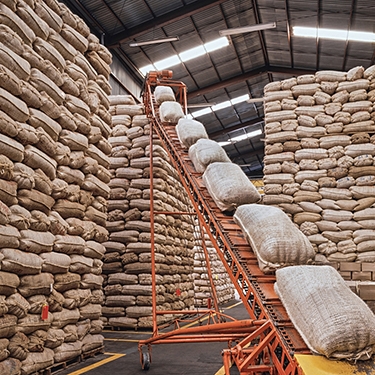
On behalf of a Canadian oilseed processer WPI's team provided market analysis, econometric modeling and financial due diligence in support of a $24 million-dollar investment in a Ukrainian crush plant. Consistent with WPI's findings, local production to supply the plant and the facility's output have expanded exponentially since the investment. WPI has conducted parallel work on behalf of U.S., South American and European clients, both private and public, in the agri-food space.