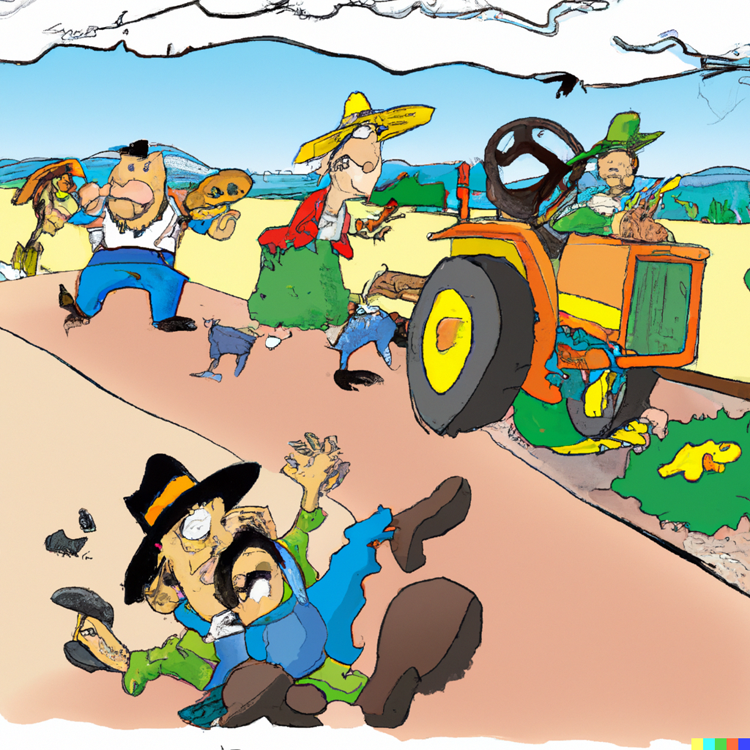
Sorry Soy Thomas Suddes, a reporter for The Plain Dealer cutely writes that Trump’s bubble-gum-and-twine trade “policy” has wrecked America-to-China soybean sales. He is correct that the current Sino-American trade war has ended U.S. soybean sales to the Middle Kingdom, something Mr. Trump has called a hostile act and threatened with retaliation. The bubble-gum-and-twine euphemism might have also been applied to the recent Middle East agreement on ending the Israeli war in Gaza. Repeating tried and failed approaches amount to Albert Einstein’s quip about insanity. The soybean situation ignores the broader context of the bilateral trading relationship. While bilateral trade has not been a wholly one-sided affair, both...



 What You Need to Know Today: Wheat futures pulled back sharply after Russian President Putin said there was a “chance” for peace and an agreement to end the war in Ukraine. There is plenty of skepticism about the opportunity for peace in Ukraine, but that didn’t stop wheat fr...

 President Trump has opened the door to 100,000 MT of beef lean trimmings (limited to HTS codes 0201.30.5091, 0201.30.5097, 0202.30.5091, and 0202.30.5097) from countries listed under the “Other Countries” TRQ effective 1 September. These imports would not be subject to the over-quot...

 Key Takeaways: CHS and OCP plan to invest up to $450 million in a Louisiana phosphate fertilizer facility capable of producing more than 1 MMT annually, marking the first new U.S. plant of its kind in more than 40 years. The facility could reduce U.S. dependence on imported finished phosphate...

From WPI Consulting
Forecasting developments in production agriculture
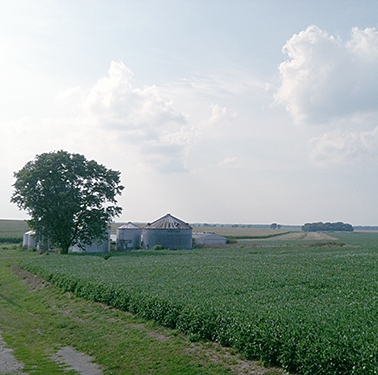
On behalf of a private U.S. agricultural technology provider, WPI’s team generated an econometric model to forecast the movement of concentrated corn production north and west from the traditional U.S. Corn Belt. WPI’s model has subsequently provided quantitative support to a multi-million-dollar investment into short-season corn variety development. WPI’s methodology included a series of interviews with regional grain elevators and seed consultants. Emphasizing outreach and communication with stakeholders who possess intimate sectoral knowledge – on-the-ground insights – is a regular component of WPI’s methodologies, made possible by WPI’s ever-growing network of industry contacts.