


Black Sea wheat and corn prices are firmer this week, driven by the futures rallies in Paris, Chicago, and other global markets. Additionally, Ukrainian rains and low water levels in the Danube river are respectively delaying harvest and barge traffic. Milling Wheat The Black Sea market is firmer in sympathy with the futures rally in Paris, Chicago and other exchanges around the world. The domestic market in Russia and Ukraine is well supported, especially for good quality milling wheat.Several purchases of European/Black Sea wheat have occurred this week, with notable buyers including Egypt and Saudi Arabia. The Egyptian GASC bought 60,000 MT of Russian and 120,000 MT of Romanian wheat at $187 CNF. There were only 3 cargoes of Russian wh...


 Key Takeaways: Dry bulk markets remain mixed with Capesize vessels seeing continued pressure from weaker demand while fixtures and rate strength gradually increases towards the smaller vessel classes. Tanker markets are pulling back from their recent highs as tonnage moves out of the Mid...

 The Trump import plan for 300,000 MT of beef supplies used for ground beef, i.e., lean trim, from September through November has, according to Secretary Brooke Rollins, brought some relief to beef prices. The Executive Order states that the Secretary of Agriculture will analyze and review the m...
 Key Takeaways: Texas illustrates the assumptions underlying the 2025 FMMO reform; Idaho exposes their limitations. The Southwest order blend (roughly 27 percent Class I, 32 percent Class III and 31 percent Class IV) exposes Texas producers to every lever USDA adjusted, with a near-neutral proj...

From WPI Consulting
Infrastructure investment due diligence
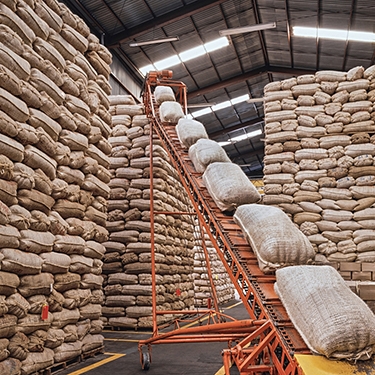
On behalf of a Canadian oilseed processer WPI's team provided market analysis, econometric modeling and financial due diligence in support of a $24 million-dollar investment in a Ukrainian crush plant. Consistent with WPI's findings, local production to supply the plant and the facility's output have expanded exponentially since the investment. WPI has conducted parallel work on behalf of U.S., South American and European clients, both private and public, in the agri-food space.