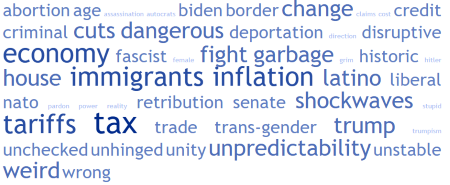
The political establishment in Washington is stunned following yesterday's rout by Donald Trump and the Republicans. The Democrats’ arch nemesis not only survived everything they threw at him, but he also took an increasing share of the minority voting block that they claimed as their own. It was an election for the ages and will be studied as an unforeseen watershed. Understanding its impacts on agriculture and trade will be WPI’s focus. The largest impact will be Mr. Trump’s pledge to impose large, broad-based tariffs on trading partners. A USDA study found that retaliatory tariffs lowered U.S. agricultural exports by $27 billion from mid-2018 when tariffs were initially imposed through the end of 2019. But the adverse impacts contin...



 What You Need to Know Today: A third U.S. border crossing (Columbus, New Mexico) has reopened to Mexican cattle imports following nearly two years of restrictions related to New World screwworm. The reopening could gradually improve feeder cattle availability, although more than 60 confi...

 Yesterday, the USDA’s Agricultural Marketing Service (AMS) released a new report of negotiated cash purchases of cattle under the mandatory price report. The report included Colorado, New Mexico, Oklahoma, Texas, and Kansas. The goal of the report was to solve the confidentiality issues e...

 Key Takeaways: U.S. soybean crushing began in 1911 and saw its most rapid expansion during the 1930s amid the broader agricultural and technology revolutions of the time. After peaking in the early 2000s, the soybean crushing industry went through a downturn as poor crush margins forced...

From WPI Consulting
Accountability and a comprehensive approach to export programming

WPI’s team helped construct a strategic approach to develop, implement, and track promotional activities in 8 key regions across the globe for an agricultural export association. With continued progress measurement and strategic advisory services from WPI, the association has seen its ROI from investments in promotional programming increase by 44 percent over the past 5 years. Not only does this type of holistic approach to organizational strategy provide measurable results to track and analyze, it fosters top-down and bottom-up organizational accountability.