


Economics, as a discipline, has been based on several assumptions over the years, and the evolution of Big Data and the “Internet of Things” (IoT) is rapidly proving that one of the basic tenets of textbook economics is obviously flawed. One of the most discussed concepts in the information technology world these days is the concept of the “Internet of Things” (IoT). This is the term for the growing inter-connectivity of various devices, sensors and various parts within other hardware or, in other words, “things.” The IoT includes: Internet home security cameras that display images from the front door of a house on a smart phone; sensors in engines and machines that send data to other engines and machines; and about any other connection tha...



 What You Need to Know Today: Grain futures fell hard overnight after the USDA’s Crop Conditions report showed better-than-expected ratings for corn and soybeans, despite difficult weather last week. The Conditions report was even more bearish in light of meaningfully beneficial rains acr...


 Key Takeaways: New Mexico’s Clean Transportation Fuel Program expands demand for low-carbon fuels and creates another market for renewable feedstocks, adding incremental pressure to already limited supplies of lower-carbon inputs. Growing competition for waste-based feedstocks such as an...
 As WPI reported on 17 July, the recently passed budget reconciliation bill in the House Budget Committee includes $12 billion in emergency farm assistance. This would be the seventh of the past nine years with ad hoc farm payments (FY2018, FY2019, FY2020, FY2022, FY2023, FY2024, and potentially...

From WPI Consulting
Infrastructure investment due diligence
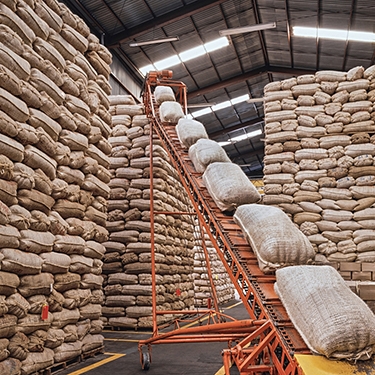
On behalf of a Canadian oilseed processer WPI's team provided market analysis, econometric modeling and financial due diligence in support of a $24 million-dollar investment in a Ukrainian crush plant. Consistent with WPI's findings, local production to supply the plant and the facility's output have expanded exponentially since the investment. WPI has conducted parallel work on behalf of U.S., South American and European clients, both private and public, in the agri-food space.