


These days we can sympathize with commercial grain and soy traders and fund managers as they try to figure out what futures prices and cash prices are likely to do and equally important, why they will do it. This is never an easy task, but currently it seems to us that there are more than the usual number of loose threads to be tied up into the ball of yarn that is today’s market. The history of commodity markets and their price action is the history of the relationship between supply and demand. That relationship can be temporally obscured or even subverted by political activity, economic issues, or other macro factors. But the supply/demand relationship as the market’s driver always re-emerges sooner or later. One of the pro...


 What You Need to Know Today: President Trump claimed the ceasefire between the U.S. and Iran was over, as both sides accused one another of violating the terms of the agreement. Commercial vessels are increasingly steering clear of the Strait of Hormuz as security risks escalate following Iran...

 Key Takeaways: The CME Group is launching new 90 percent Lean Beef and 50 percent Lean Beef futures and options contracts in July. There are five key factors that must be present in physical markets and futures contract specifications for futures contracts to become successful. The two l...
 Russian Grain Markets: 29 June-3 July 2026 The new marketing season has officially begun in Russia, although bearish sentiment has been concentrated in the southern regions closest to the Black Sea ports, where export demand has been weakest. Delays in grain deliveries to inland elevators have...

From WPI Consulting
Infrastructure investment due diligence
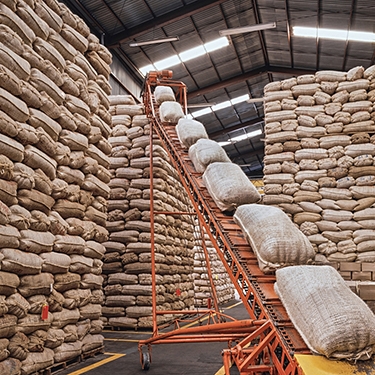
On behalf of a Canadian oilseed processer WPI's team provided market analysis, econometric modeling and financial due diligence in support of a $24 million-dollar investment in a Ukrainian crush plant. Consistent with WPI's findings, local production to supply the plant and the facility's output have expanded exponentially since the investment. WPI has conducted parallel work on behalf of U.S., South American and European clients, both private and public, in the agri-food space.