First quarter global merchandise trade accelerated faster than expected as everyone expedited purchases ahead of tariffs and potential slowing of import demand. These market exchanges have likely remained accelerated ahead of the now 1 August tariff deadline, but increased costs were apparent in today’s CPI report for June. However, the uptick in inflation was too small to sidetrack Mr. Trump’s plan. The President announced a trade deal with Indonesia that sounds largely lopsided in favor of the U.S., and there are rumors of an impending deal with India. The two hard to crack nuts are the EU and Japan. Brussels has been holding on retaliation but now faults Washington for resisting a deal. The White House believes Europe c...



 What You Need to Know Today: Wheat futures pulled back sharply after Russian President Putin said there was a “chance” for peace and an agreement to end the war in Ukraine. There is plenty of skepticism about the opportunity for peace in Ukraine, but that didn’t stop wheat fr...

 President Trump has opened the door to 100,000 MT of beef lean trimmings (limited to HTS codes 0201.30.5091, 0201.30.5097, 0202.30.5091, and 0202.30.5097) from countries listed under the “Other Countries” TRQ effective 1 September. These imports would not be subject to the over-quot...

 Key Takeaways: CHS and OCP plan to invest up to $450 million in a Louisiana phosphate fertilizer facility capable of producing more than 1 MMT annually, marking the first new U.S. plant of its kind in more than 40 years. The facility could reduce U.S. dependence on imported finished phosphate...

From WPI Consulting
Infrastructure investment due diligence
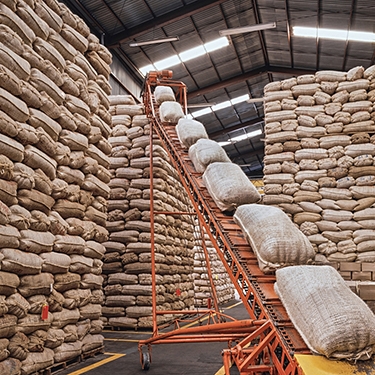
On behalf of a Canadian oilseed processer WPI's team provided market analysis, econometric modeling and financial due diligence in support of a $24 million-dollar investment in a Ukrainian crush plant. Consistent with WPI's findings, local production to supply the plant and the facility's output have expanded exponentially since the investment. WPI has conducted parallel work on behalf of U.S., South American and European clients, both private and public, in the agri-food space.