
USDA’s Jan estimate for 2025/26 U.S. corn is for larger production and higher feed residual usage to result in greater ending stocks: Corn production is estimated at 17.0 billion bushels, up 269 million on a 0.5-bushel increase in yield to 186.5 bushels per acre and a 1.3-million acre rise in harvested area. The record crop in 2025 exceeds the prior high set in 2023 by 1.7 billion bushels or over 40 million tons. The world corn outlook for 2025/26 is for world coarse grain production to increase 14.8 million tons to 1.591 billion. Corn production in China is raised to a record 301.2 million tons based on the latest data from the National Bureau of Statistics. Global corn stocks, at 290.9 million tons, are up 11.8 million...



From WPI Consulting
Infrastructure investment due diligence
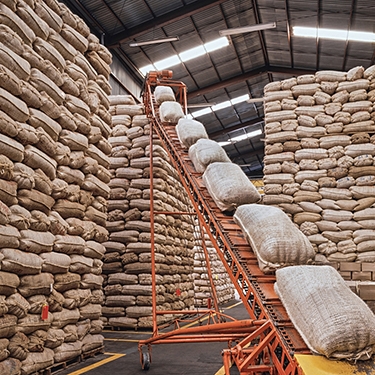
On behalf of a Canadian oilseed processer WPI's team provided market analysis, econometric modeling and financial due diligence in support of a $24 million-dollar investment in a Ukrainian crush plant. Consistent with WPI's findings, local production to supply the plant and the facility's output have expanded exponentially since the investment. WPI has conducted parallel work on behalf of U.S., South American and European clients, both private and public, in the agri-food space.