
USDA’s outlook for 2025/26 U.S. wheat is for yields to average 51.6 bushels per acre, which is up 0.4 bushels from last year. Hard Red Winter and White account for most of the increase. Total 2025/26 domestic use is a record 977 million bushels, mostly on food use. Exports are projected lower at 800 million bushels as the United States is expected to face strong competition. The result is that the projected 2025/26 ending stocks of U.S. wheat are 10 percent above last year at 923 million bushels, the highest level in six years. The projected 2025/26 season-average farm price is $5.30 per bushel, down $0.20 from last year on higher stocks. The global wheat outlook for 2025/26 is for larger supplies and slightly higher stocks; Supplies...


 What You Need to Know Today: The cattle market rebounded sharply this week, with January feeder cattle futures gaining $16.98/cwt and February live cattle futures advancing $7.60/cwt since last Friday. Tyson Foods' plans to restore a second processing shift at its Amarillo, Texas, facili...

 Tuesday’s CPI report from the Bureau of Labor Statistics (BLS) showed inflation roaring back stronger than expected in October. That probably locks in another rate hike – which was expected anyway – at the Federal Open Market Committee (FOMC) meeting in December. Consumer pric...

 Key Takeaways: The rationale for farm programs has changed significantly from their original intentions. Farmers’ incomes have grown sharply and have surpassed non-farm incomes beginning in the 1970s. Current farm programs are complex and focus on supporting risk management, environmenta...

From WPI Consulting
Forecasting developments in production agriculture
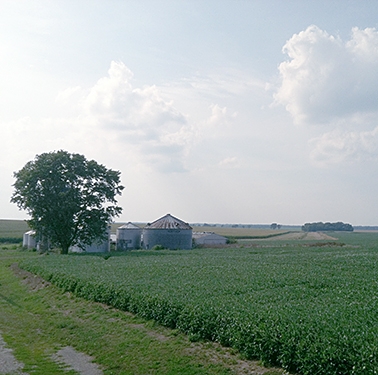
On behalf of a private U.S. agricultural technology provider, WPI’s team generated an econometric model to forecast the movement of concentrated corn production north and west from the traditional U.S. Corn Belt. WPI’s model has subsequently provided quantitative support to a multi-million-dollar investment into short-season corn variety development. WPI’s methodology included a series of interviews with regional grain elevators and seed consultants. Emphasizing outreach and communication with stakeholders who possess intimate sectoral knowledge – on-the-ground insights – is a regular component of WPI’s methodologies, made possible by WPI’s ever-growing network of industry contacts.