
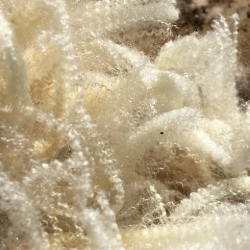
Wool is one of the most misunderstood U.S. agricultural commodities. Fine wool in the 17–21 micron range commands premium prices in luxury apparel, technical outdoor gear, and high-end knitwear, while coarser wool is gaining support as building codes and standards shift toward natural-fiber insulation. Yet the U.S. captures little of wool’s modern value beyond raw production. The issue is not production volume. At roughly 22.5 million pounds and $32 million in annual raw production value, U.S. wool has never been a large commodity. The issue is value capture: most value-added processing (scouring, grading, combing, spinning, weaving, and finishing) occurs overseas, leaving American producers at the lowest rung of the chain. The...



 What You Need to Know Today: Grain markets were sharply higher overnight and through the day session as the concerning wet weather pattern persists over the Midwest. Grain traders – and soybean market players in particular – will be closely parsing both what is said and unsaid from...

 Key Takeaways: Higher interest rates increase the cost of financing agricultural production, reducing farm margins without providing any corresponding increase in production or revenue. The financial impact of higher rates varies considerably by operation, with highly leveraged producers and t...
 Last week, the Senate Ag Committee passed the farm bill on a party-line vote upon the return of Senators Mitch McConnell (R-Kentucky) and Tommy Tuberville (R-Alabama), who missed the vote on 6 August (see WPI coverage here) when it failed by a similar party-line vote, 10-11. Democrats held the...

From WPI Consulting
Illuminating the value of technical research

On behalf of a commodity producer organization, WPI evaluated the outputs from a project that featured a $5 million investment into technical research over multiple years. WPI’s team captured the results of this extensive effort and synthesized them for presentation to the organization’s governing board; among the findings uncovered and presented for the first time was the development of genomic traits proven, via rigorous testing, to provide crop yield advantages of 50 percent or more to U.S. farmers in times of drought. Capturing measurable results from long-term efforts can be challenging. Educating clients on the dynamics of success measurement when quantifiable results are not readily available requires deep client-consultant collaboration and an ability to consider both near- and long-term client aspirations with market/policy dynamics – attributes that WPI brings to every consulting engagement.