


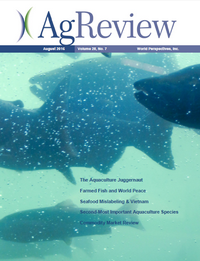
The Aquaculture Juggernaut Despite efforts by antagonists to end fish farming, its efficiency will keep it the dominant animal protein production methodology. Farmed Fish and World Peace Tension between wild-caught fish supply and demand is causing territorial conflict in Southeast Asia and could potentially create civil unrest elsewhere. Aquaculture is positioned to balance economic and environmental factors and help maintain world peace. Will Seafood Mislabeling in the U.S. Help Vietnam's Aquaculture Industry? Seafood mislabeling has led to tougher standards for imports into the U.S. as well as new traceability and sustainability standards from exporting countries, including Vietnam. Tilapia - The Second-Most Important Aquaculture S...


 What You Need to Know Today: Harvest pressure in the U.S. sent corn and soybeans lower as supplies increased and there were signs USDA’s upward revisions to yields in the October WASDE could be close to right. The conflict between Russia and Ukraine escalated over the weekend, with Ukrai...

 Key Takeaways: India is excluding sugarcane juice, sugar syrup, and B-heavy molasses from its 2026/27 fuel ethanol procurement program to protect domestic sugar supplies, potentially shifting additional demand toward corn and rice. India’s corn consumption for ethanol has surged from jus...
 Developer's Note 24 August 2026: WPI recently completed an exercise that updated the codebase for this app and solved some of the discrepancies between our five-year average calculation and USDA's. There are a few lingering cases where early (late) starts (finishes) to the crop cycle resu...

From WPI Consulting
Weighing in on strategic realignment

WPI’s team was retained by the governing board of a U.S. industry organization to review a decision, reached by vote, to invest significant assets into the development and management of an export trading company. WPI’s team conducted a formal review of this decision and concluded that the current level of market saturation would limit the benefits of the investment. Based on WPI’s analysis and recommended actions, the board subsequently reversed its decision and undertook a strategic planning effort to identify more impactful investments. On behalf of numerous clients, WPI has not only assisted in identifying strategic paths but also advised their implementation.