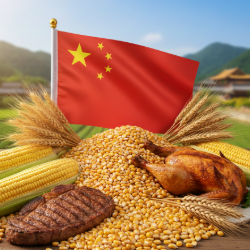
Soybeans Dim Sums report that Chinese propaganda’s focus on soybean self-sufficiency has faded as Brazil has become the top foreign supplier. In short, dependence on a main rival for a staple crop was the problem. China’s self-sufficiency in soybeans in 2025 was 16.2 percent, versus 17 percent in 2019. China’s use of soybeans is increasing at 2–5 percent per year, as rising incomes are correlated with higher protein demand. The national focus is now on boosting soybean yields rather than expanding the area sown to the crop. There is satisfaction in being able to cover food-grade use with domestic soybeans while foreign (lower-grade) commodities get fed to livestock. China’s needs are taken care of w...



 The heat of summer is now transitioning into more moderate temperatures, and the next two months have the busiest marketing periods of the year for replacement cattle. Weather always influences the replacement cattle market, and the primary grain belt in the Southern Plains, where many cattle a...


 Key Takeaways: Diesel accounts for about 64 percent of U.S. farm fuel spending. For farmers, the pressing question is what a higher price adds to each field operation. Iowa farm diesel averaged $5.50/gallon in September, compared with the $2.89/gallon Iowa State assumed for its February machin...

 It’s often said that history doesn’t repeat itself, but it often rhymes. If only humanity could stop repeating the worst parts of our historic verse. Politicians, again at the center of this week’s follies, have found a way to make old mistakes sound new: announce them at a pr...
 Officials from the Trump Administration are reportedly considering rolling back the Administration’s beef import plan as there is a growing panic about the midterm elections. The proposal to reduce the 300,000 MT of beef imports – 100,000 MT for September – is being discussed...

From WPI Consulting
Accountability and a comprehensive approach to export programming

WPI’s team helped construct a strategic approach to develop, implement, and track promotional activities in 8 key regions across the globe for an agricultural export association. With continued progress measurement and strategic advisory services from WPI, the association has seen its ROI from investments in promotional programming increase by 44 percent over the past 5 years. Not only does this type of holistic approach to organizational strategy provide measurable results to track and analyze, it fosters top-down and bottom-up organizational accountability.