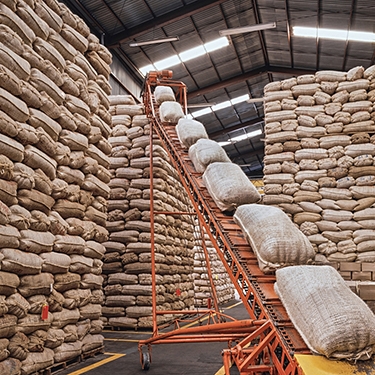
Southeast Asia has experienced droughty conditions the past several months and the United Nations Economic and Social Commission for the Asia/Pacific region says it is part of a longer-term meteorological trend. The change is most adversely impacting rice production and will likely benefit wheat. Southeast Asia has been importing more wheat than corn but countries in the region have shown over the past decade a faster growing interest in corn for livestock feed. That is now likely to change.
The region has already shown a strong preference for wheat as a food ingredient with demand for this commodity growing at an average pace of 6 percent per year over the last decade. This contrasts with a relatively flat per capita market for r...



 Markets are caught between reasons to keep selling and reasons to take another look. Fund liquidation and renewed peace talks are pressuring grains, while fresh export business and some diesel relief offer encouragement. Corn recovered nearly 10 cents from its low to finish higher, while soybea...
 WPI Grain Prices and Freight Rate App Note: you can also visit the app directly by clicking here. Supplemental Information The section below offers a concise view of the options available in the current version of the WPI FOB Price and Freight Rate app, along with a short “How To”...
 Russian Grain Markets: 12–16 October 2026 During the week in review, the Russian grain market began recovering after an extended decline driven largely by Black Sea logistics bottlenecks, a good crop and weaker global demand in traditional Russian markets. Russia is beginning to harvest c...