


Export Sales and Shipments for March 21-27, 2025. Wheat: Net sales of 340,000 metric tons (MT) for 2024/2025 were up noticeably from the previous week and up 40 percent from the prior 4-week average. Export shipments of 499,600 MT were up 17 percent from the previous week and 33 percent from the prior 4-week average. The destinations were primarily to the Philippines (123,900 MT), Ecuador (81,100 MT), South Korea (67,900 MT), Mexico (55,700 MT), and the Dominican Republic (40,700 MT). Corn: Net sales of 1,173,200 MT for 2024/2025 were up 13 percent from the previous week and 6 percent from the prior 4-week average. Export shipments of 1,805,900 MT were up 9 percent from the previous week and 12 percent from the prior 4-week average. The des...


 What You Need to Know Today: Record biofuel demand continues to support soyoil values, as EIA data show that May soyoil usage as a biofuel feedstock reached a record 1.434 billion pounds. The latest data reinforces the strength of renewable fuel demand and helps explain ongoing investment in a...
 A bipartisan group of 26 lawmakers, led by Representative David Valadao (R-CA), sent a letter to House Speaker Mike Johnson (R-Louisiana) and House Agriculture Committee Chair GT Thompson (R-Pennsylvania) requesting that $5 billion of the temporary economic assistance for farmers go toward spec...


 Key Takeaways: Soyoil consumption as a biofuel feedstock climbed to a record 1.434 billion pounds in May, setting a new all-time monthly high. Improved 45Z policy clarity in February 2026 has supported stronger soyoil demand from the biofuel sector by providing producers with greater certainty...

From WPI Consulting
Forecasting developments in production agriculture
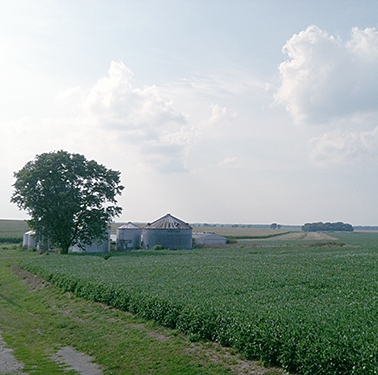
On behalf of a private U.S. agricultural technology provider, WPI’s team generated an econometric model to forecast the movement of concentrated corn production north and west from the traditional U.S. Corn Belt. WPI’s model has subsequently provided quantitative support to a multi-million-dollar investment into short-season corn variety development. WPI’s methodology included a series of interviews with regional grain elevators and seed consultants. Emphasizing outreach and communication with stakeholders who possess intimate sectoral knowledge – on-the-ground insights – is a regular component of WPI’s methodologies, made possible by WPI’s ever-growing network of industry contacts.