


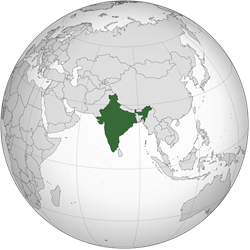
Stable Pulses Demand; Prices Remain Low India’s 2018/10 khariff pulses production is expected to reach 9.2 MMT, down slightly from 9.34 MMT in the previous season. With the rabi crops (sown in October/November and harvested in April) forecast at over 15 MMT, there will be suffient domestic production to meet India’s demand of 24 MMT. Prices should be high in when demand and supply are so balanced with imports thus restricted, but that is not the case. Chickpea is one of the major pulses, and while demand is good, it is produced in the rabi season. India produced 11.23 MMT in 2017/18, and there is certainly an oversupply. Its prices are curently 6.75 percent lower than the government of India’s (GOI”s) announded Min...


 What You Need to Know Today: A third U.S. border crossing (Columbus, New Mexico) has reopened to Mexican cattle imports following nearly two years of restrictions related to New World screwworm. The reopening could gradually improve feeder cattle availability, although more than 60 confi...

 Yesterday, the USDA’s Agricultural Marketing Service (AMS) released a new report of negotiated cash purchases of cattle under the mandatory price report. The report included Colorado, New Mexico, Oklahoma, Texas, and Kansas. The goal of the report was to solve the confidentiality issues e...

 Key Takeaways: U.S. soybean crushing began in 1911 and saw its most rapid expansion during the 1930s amid the broader agricultural and technology revolutions of the time. After peaking in the early 2000s, the soybean crushing industry went through a downturn as poor crush margins forced...

From WPI Consulting
Infrastructure investment due diligence
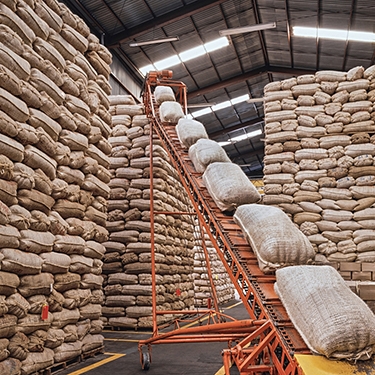
On behalf of a Canadian oilseed processer WPI's team provided market analysis, econometric modeling and financial due diligence in support of a $24 million-dollar investment in a Ukrainian crush plant. Consistent with WPI's findings, local production to supply the plant and the facility's output have expanded exponentially since the investment. WPI has conducted parallel work on behalf of U.S., South American and European clients, both private and public, in the agri-food space.